

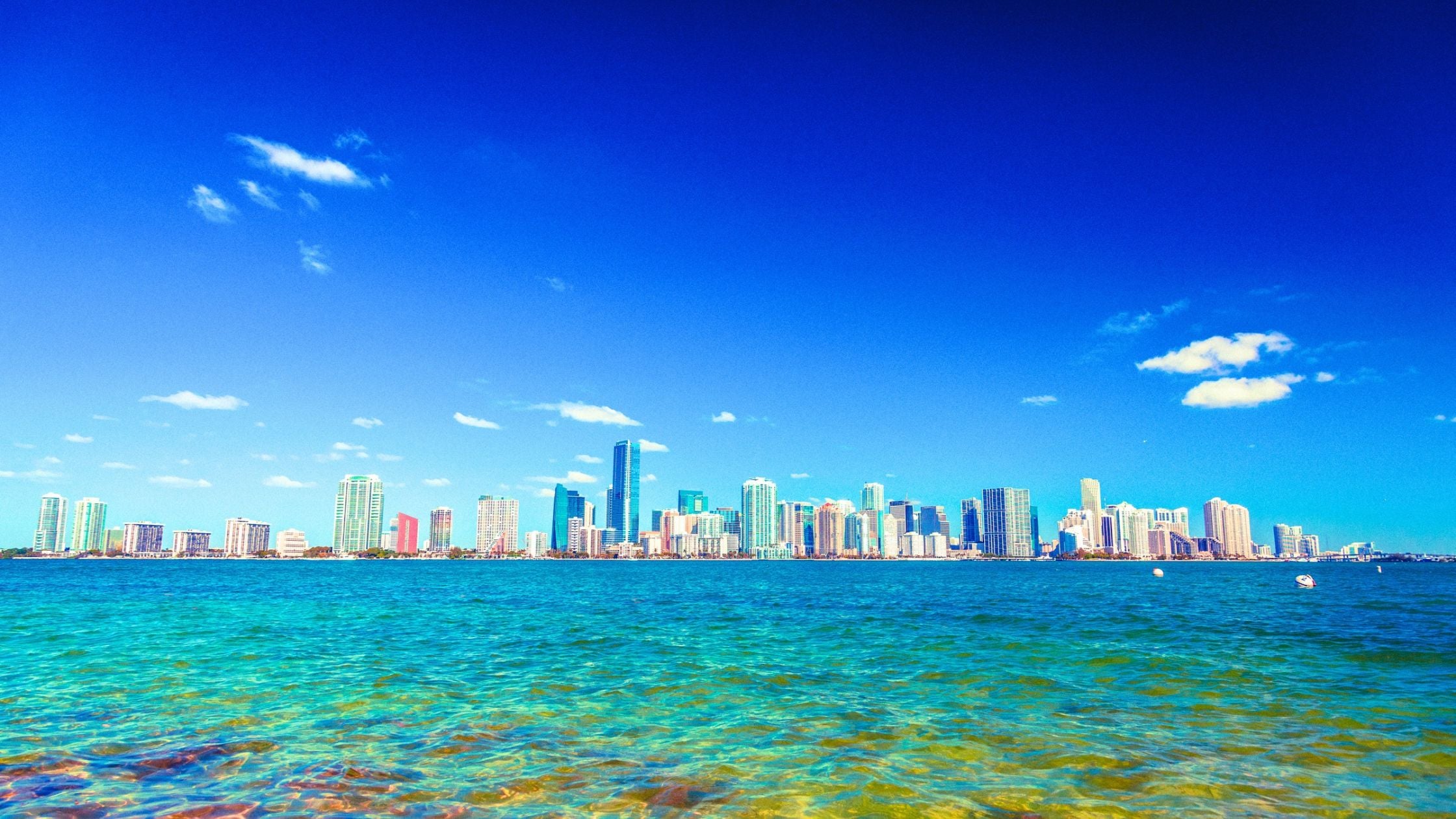
Buyers ask me to compare Edgewater vs Brickell Miami more than almost any other Miami pair. On paper the two neighborhoods look similar. Both are condo-dominant. Both sit on or near Biscayne Bay. Both have been in the news for the same tower boom. In practice, the condo you end up buying depends on how you actually spend your mornings and evenings, not on how the two neighborhoods look from the causeway.
I've closed deals in both. My background as a mortgage loan originator going back to 2006 means I usually get the finance questions first. Those matter. But the question I spend the most time on with Edgewater and Brickell buyers is a quieter one. It's which market is actually built for the way you live. Let me walk you through how I compare them.
Two Different Street Grids, Two Different Buyers
Brickell and Edgewater are both inside the City of Miami. Zoom out and they look adjacent. Zoom in and the street grids and the land uses tell different stories.
Brickell sits south of the Miami River, roughly bounded by the river on the north, Biscayne Bay on the east, and SW 15th Road on the south. It's a dense urban grid centered on Brickell Avenue, which is the spine of Miami's financial district. Brickell is where the banks, the law firms, the consulates, and the restaurants are stacked into mixed-use towers. The neighborhood is anchored by Brickell City Centre, by the Mary Brickell Village retail strip, and by a growing cluster of office and residential towers that keep rebuilding themselves.
Edgewater is north of Downtown Miami, tucked between Biscayne Bay on the east and Biscayne Boulevard on the west, roughly from NE 17th Street up to NE 36th Street at the Design District boundary. Edgewater is linear. It is primarily residential condos. There are fewer offices, fewer bank towers, fewer restaurants embedded in the ground floors of residential buildings. The grid is oriented toward the bay. If Brickell is downtown, Edgewater is a bayfront.
For a broader look at where either neighborhood sits in the Miami map, start with my Miami Neighborhood Guides hub and then come back here.
What Each Market Actually Offers
The two markets are not interchangeable even for a buyer who wants a two-bedroom condo under a specific budget. The buildings themselves are structured differently.
Brickell condo stock is heavily mixed-use. Many of the newer towers include retail on the ground floor, offices or hospitality in the middle, and residences above. The buildings tend to be taller, with larger amenity decks, and the HOA fees reflect that. Walking out of your building in Brickell often means walking into another building with a restaurant, a bar, a gym, or a grocery store.
Edgewater condo stock is residential-first. The newer bayfront towers are built around views, pools, and spa amenities. The ground floors are often lobby plus limited retail. Walking out of your building in Edgewater usually means a short walk to Margaret Pace Park, to a smaller cluster of restaurants along NE 24th Street or NE 29th Street, or across Biscayne Boulevard toward the Design District.
For the Brickell depth, my full Living in Brickell Miami guide lays out the lifestyle and the daily rhythm in one place. For Edgewater, my Living in Edgewater Miami bayfront condo guide does the same.
Edgewater vs. Brickell at a glance
Feature | Brickell (33131) | Edgewater (33137) |
Position | South of the Miami River, bay to the east | North of Downtown, bay to the east, Design District to the north |
Street pattern | Urban grid centered on Brickell Avenue | Linear, oriented toward Biscayne Bay |
Building character | Mixed-use high-rises with retail, offices, and residences | Residential-first condo towers, limited retail |
Primary park | Simpson Park, Brickell Key baywalk | Margaret Pace Park |
Transit anchor | Metromover (free loop), Brickell Metrorail | Walking distance to MiamiCentral Brightline, local bus routes |
Typical buyer | Professionals working or clients at Brickell offices, international buyers | Bay-view-first buyers, residents who want quiet, Design District and Wynwood commuters |
Transit, Walkability, and the Daily Commute
Transit is where the two neighborhoods actually diverge for most buyers.
Brickell is built around Miami's rail. Brickell Station is a Metrorail stop on the Green and Orange lines, and Brickell is a core stop on the free Miami-Dade Transit Metromover loop, which circles Brickell and Downtown. You can live in a Brickell tower and reach Government Center, Bayside, Wynwood (via connection), or Miami International Airport without a car most days. The Metromover is fare-free, which matters more than people expect.
Edgewater does not have a Metromover stop and does not have a Metrorail stop. What Edgewater does have is walking distance (depending on where in Edgewater) to MiamiCentral, the Brightline terminal in Downtown Miami, which runs intercity service to Aventura, Fort Lauderdale, Boca Raton, West Palm Beach, and Orlando. If your life includes regular West Palm or Orlando trips, that connection is genuinely useful. Day to day inside Miami, Edgewater is more car-dependent than Brickell, and most Edgewater residents I know use a car for anything that is not within a six-block radius.
Walkability inside the neighborhood favors Brickell. Walkability out of the neighborhood to the Design District, Midtown, and Wynwood favors Edgewater. Which one matters more depends on where you actually spend your week.
The Numbers Today
A fair comparison needs real numbers. Here is what the Miami Association of Realtors reported for Miami-Dade condo market conditions in October 2026, which is the most recent monthly report at the time I'm writing this.
Miami-Dade existing condo sales were 907 in October 2026, down 9.57 percent from 1,003 the year before. The median sale price for Miami-Dade existing condos was $397,500, down 0.63 percent from $400,000 a year earlier. Cash sales accounted for 48.4 percent of all Miami existing condo sales that month. Condo months of supply sat at 12.7 months, which the Miami Realtors report characterizes as a buyer's market. Condo inventory was 11,989 active listings, down 5.30 percent year over year. Those figures are drawn from the MIAMI REALTORS Miami-Dade home sales report published November 16, 2026.
Those numbers are Miami-Dade wide. Brickell and Edgewater each sit inside that wider market, and the per-neighborhood story does not always track county numbers. The Miami Realtors report does not publish ZIP-code level medians, so I'm not going to invent them for you here. What I will tell you is what I see on the ground, which is that condo inventory is elevated in both neighborhoods, the leverage has shifted toward well-prepared buyers, and the right offer with the right financing lines up more deals right now than it did at the top of the cycle.
If you want parcel-level data for a specific building or address in either neighborhood, the Miami-Dade Property Appraiser is the authoritative source. You can pull assessed values, prior sales, FEMA flood zone information, and taxable value history directly from that site before you ever talk to an agent.
Who I Tell to Buy in Edgewater vs. Brickell
This is the question I spend the most time on with buyers.
I tend to steer buyers toward Brickell when their life revolves around their workday inside the neighborhood, when they want walk-everywhere access to a dense restaurant and retail scene, when they travel internationally through MIA and want transit-light access, and when they value living in a tall mixed-use tower with everything underneath them. Professionals whose employers are on Brickell Avenue almost always land in Brickell.
I tend to steer buyers toward Edgewater when the view is the first requirement, when a quieter residential building is preferred over a high-amenity mixed-use tower, when the Design District, Midtown, and Wynwood are the regular evening destinations, when a Brightline-friendly life matters, and when the ability to walk to Margaret Pace Park every morning is the kind of thing that changes how someone feels about their week.
Neither of these is a wrong choice. Both are condo-heavy, both have bay exposure, both have strong long-term fundamentals in my view. A useful related comparison for Brickell-leaning buyers is my Brickell vs. Downtown Miami guide, because the Brickell vs. Downtown decision is often the next question a Brickell-leaning buyer asks.
What to Look at Before You Make an Offer
This is the practical checklist I run through with every Edgewater or Brickell condo buyer before we structure an offer. It applies to both neighborhoods.
First, pull the parcel on the Miami-Dade Property Appraiser site. Look at the assessed value trend over the last five years, look at the most recent sale, and look at the FEMA flood zone designation for the parcel. Both neighborhoods sit on or near Biscayne Bay, so flood zones matter for insurance pricing and sometimes for financing.
Second, request the condo building's most recent financials, reserve study, and any disclosures on special assessments. In Florida, Senate Bill 4-D and subsequent legislation changed the reserve-funding requirements for condominium associations. A building that has not caught up to the funding standard may be heading into a special assessment, which changes the real cost of ownership.
Third, confirm the HOA fee structure and what it includes. High-amenity buildings in both neighborhoods can have HOA fees that materially change the monthly carry. I always recalculate the monthly carry using the actual HOA fee plus property tax plus insurance plus financing, not the asking price alone.
Fourth, look at the hurricane and wind exposure of the building. The NOAA National Weather Service Miami office publishes historical track and wind-field information. Building insurance deductibles and premiums are different for different generations of construction and different elevations.
Fifth, download my Free Home Buyer Guide, which walks through the full pre-offer process I use for Miami condo buyers.
Let's find the one that fits
If you're deciding between Edgewater and Brickell, the honest answer is that the right one is the one that makes your week easier. Not the one with the better amenity reel. If you want to walk to a specific building, I can usually meet you there this week. Reach out and tell me which part of your daily life matters most, and I'll line up the right side-by-side of actual units for you to compare.
Check out this article next