Miami's Oldest Building Is a 12th-Century Cloister You've Probably Never Seen
September in Miami marks the start of Hispanic Heritage Month, and one of the most tangible pieces of Spanish colonial history in the country sits fifteen minutes from Aventura Mall. Most Miamians have driven past The Ancient Spanish Monastery hundreds of times without knowing what it is. Even people who moved here specifically to be near the Aventura and Sunny Isles corridor often go decades before somebody finally points at the walled compound off West Dixie Highway and explains what it actually is.
The short version: a genuine 12th-century Cistercian cloister, originally built in Segovia, Spain, in the year 1141. Disassembled by William Randolph Hearst in the 1920s, packed into 11,000 wooden crates lined with hay, shipped to the United States for reassembly at his California estate, then abandoned for 26 years in a Brooklyn warehouse before two Ohio businessmen bought the whole jumbled pile at auction in 1952 and shipped it to Miami. Nineteen months and roughly $1.5 million (in 1950s dollars) later, the cloister was reassembled stone by stone on a quiet residential lot in North Miami Beach, where it has stood ever since.
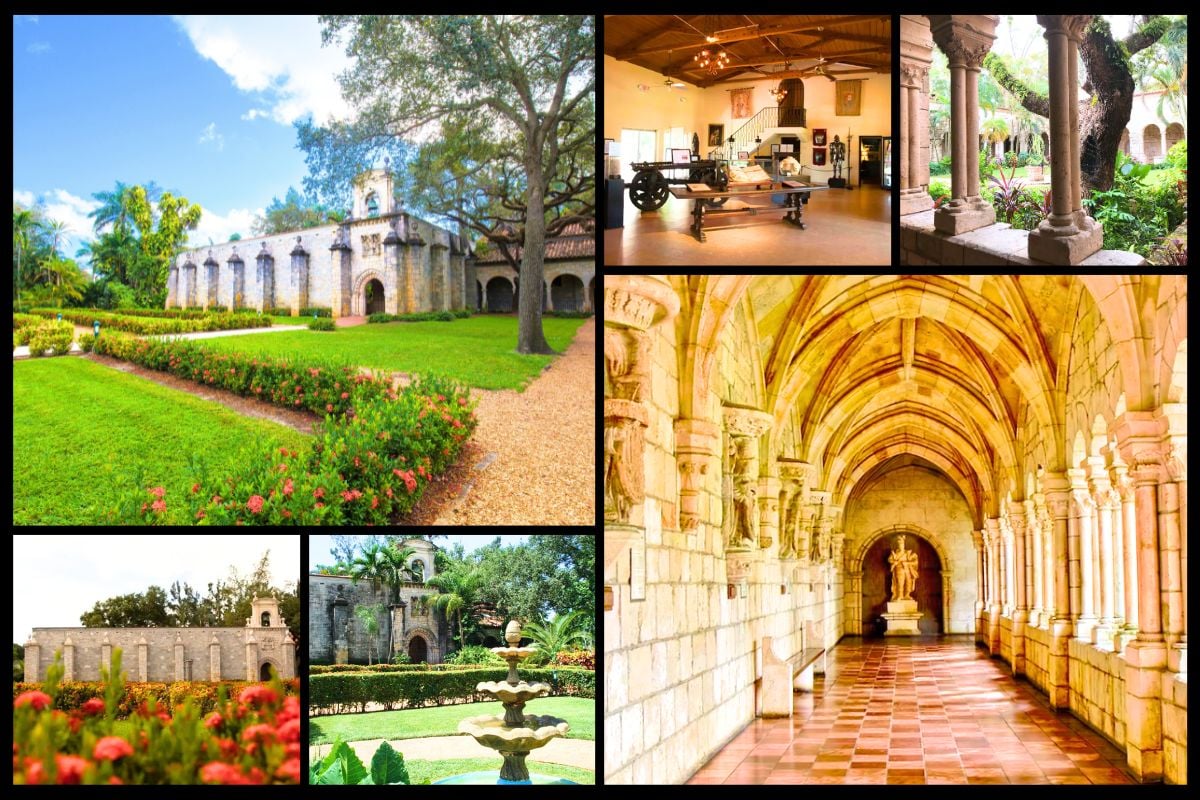
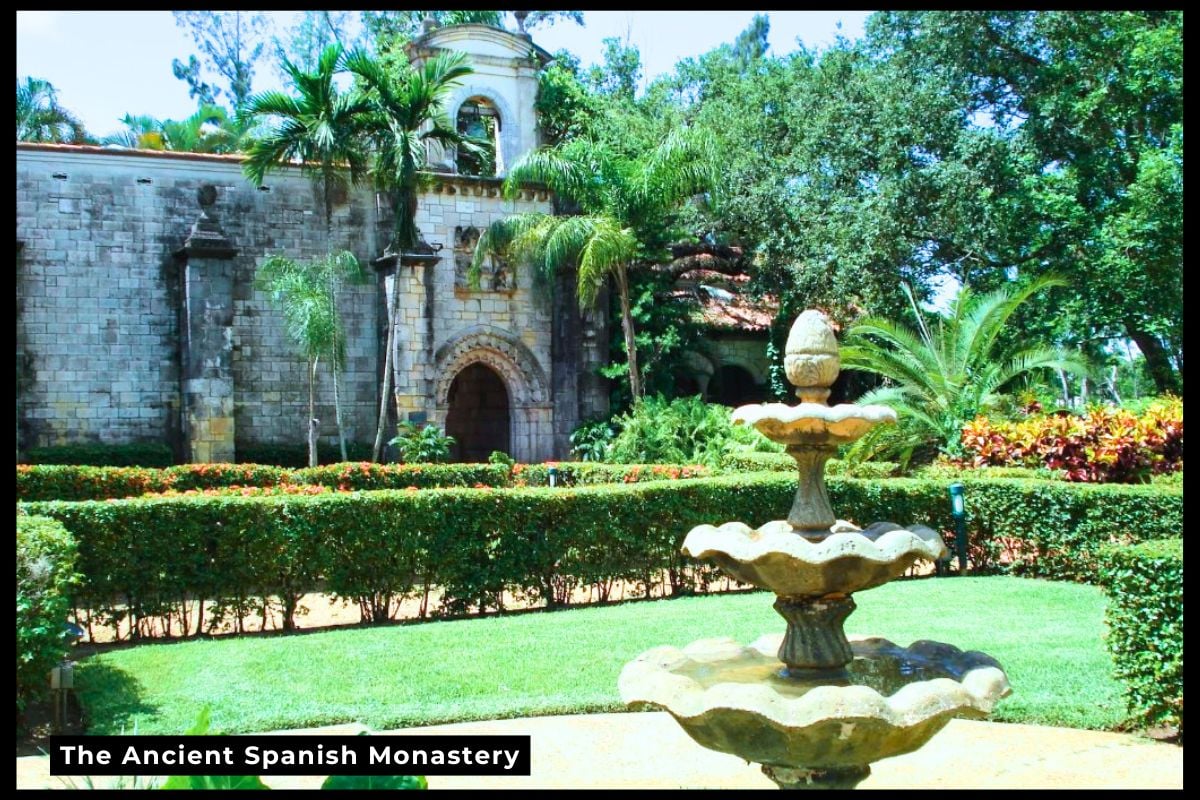
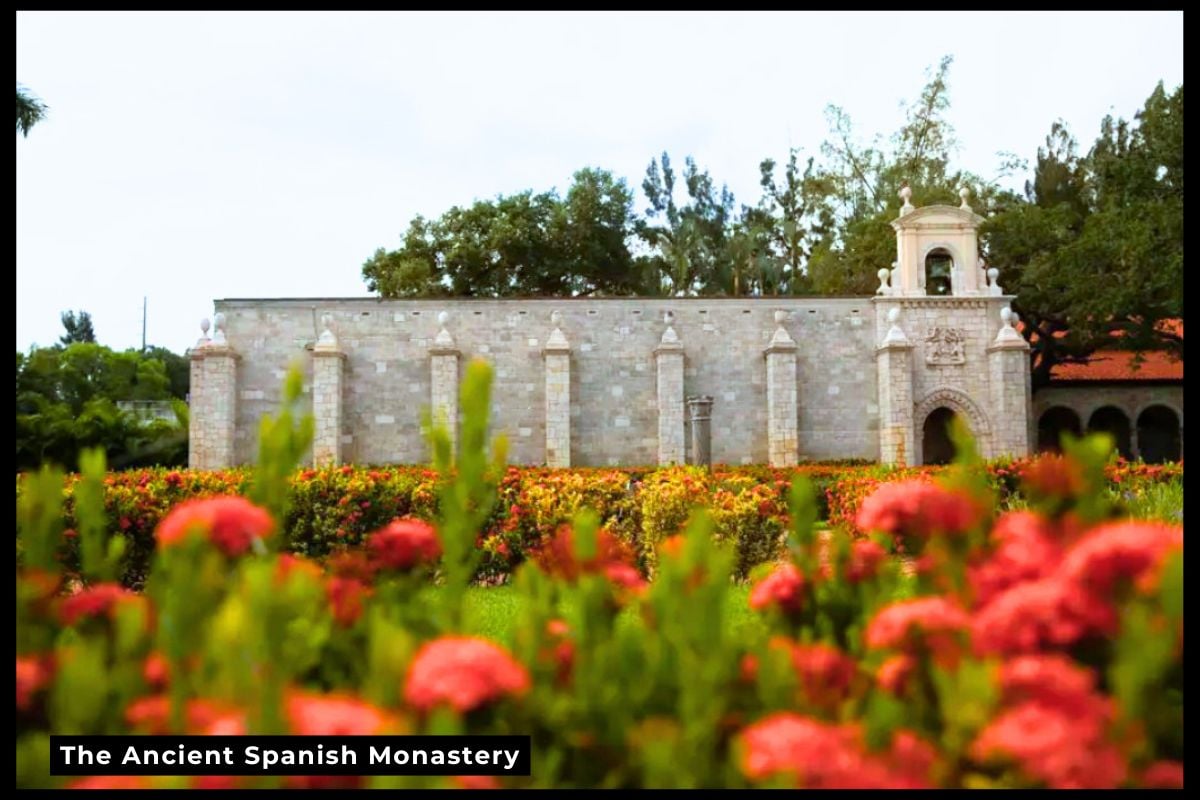
It is one of the oldest buildings in the entire Western Hemisphere. The cloister walk, the walled gardens, the arched chapel, and the small on-site cemetery all feel like they belong in the Spanish countryside, because they were built there. It also happens to be an active Episcopal church, a working wedding and quinceanera venue, and one of the most photogenic and quietly cinematic places in Miami.
September, with the late-summer heat still peaking and Hispanic Heritage Month underway, is the exact right time to go. The stone walls stay 10 to 15 degrees cooler than the street. The formal gardens are still lush from the summer rains. And the connection to Spanish colonial history gives Hispanic Heritage Month programming a physical anchor that a Calle Ocho photo simply cannot match.
A 900-Year-Old Piece of Segovia in North Miami Beach
📍 16711 West Dixie Hwy, North Miami Beach, FL 33160
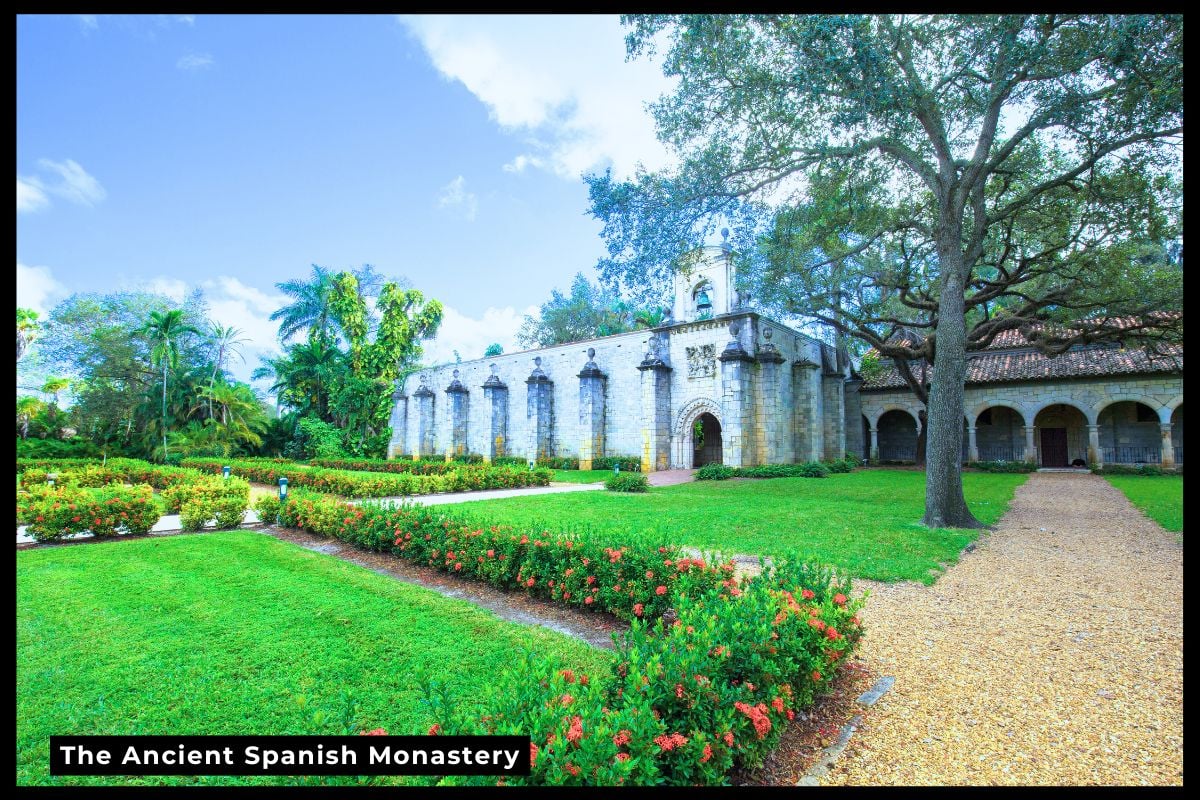
The building was originally the Monastery of Our Lady, Queen of the Angels, constructed between 1133 and 1141 in Sacramenia, a village in the Spanish province of Segovia. Construction started under the reign of King Alfonso VII of Leon and was completed under his son. For nearly 700 years the monastery housed a small Cistercian order that kept the compound in continuous use through the medieval period, the Reconquista, the Habsburg dynasty, and the early Bourbons.
The Cistercians were an offshoot of the Benedictine order founded in 1098, known for their strict interpretation of the Rule of Saint Benedict, their commitment to manual labor and self-sufficient agriculture, and the distinctive Romanesque architecture they used for their monasteries across Europe. Sacramenia's monastery was a working example of that architectural tradition: thick stone walls, arched cloister walks, minimal ornamentation, and a courtyard garden at the center designed for the monks' daily contemplative walks.
In the 1830s, during Spain's Ecclesiastical Confiscations, the Spanish government seized the monastery from the church and repurposed it as a granary and stable for a nearby livestock operation. It stayed in that use for nearly a century, quietly deteriorating.
In 1925, at the peak of his estate-building ambition, William Randolph Hearst purchased the entire structure. His plan was to have it dismantled, shipped to the United States, and reassembled at San Simeon (his California estate) as part of the sprawling architectural collection he was building there. Every stone was numbered, drawn on the corresponding crate, and packed carefully into wooden crates lined with hay for the transatlantic voyage. Eleven thousand crates in total.
The plan collapsed on arrival. A hoof-and-mouth disease outbreak had recently struck Segovia, and U.S. Customs officials required all organic packing material to be burned as a quarantine precaution. The hay was destroyed. The numbered labels on the crates were destroyed with it. Hearst then went bankrupt during the Great Depression and never touched the crates. They sat in a Brooklyn warehouse for 26 years, essentially a giant jigsaw puzzle with the picture on the box thrown away.
In 1952, two Ohio businessmen (William Edgemon and Raymond Moss) bought the entire jumbled collection at auction, sight unseen, and shipped it to Miami. It took 19 months and roughly $1.5 million in 1950s dollars to reassemble the monastery, working from the original architectural drawings and matching stones by material, size, and shape. A handful of stones are still visibly out of place. That is part of the story.
The reconstructed monastery opened to the public in the 1960s and has stayed open ever since. It is now owned by the Episcopal Diocese of Southeast Florida and operates as St. Bernard de Clairvaux Church.
What to Expect
The Cloister Walk
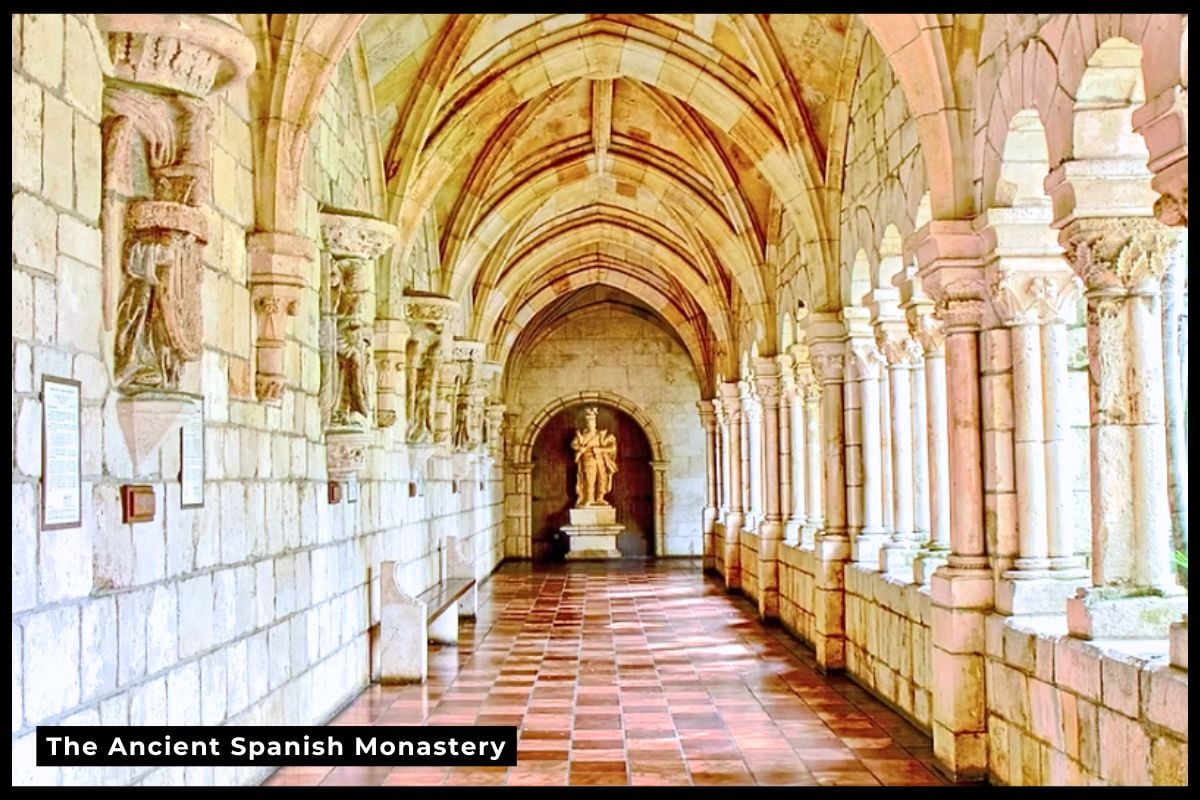
The centerpiece of the monastery is the covered cloister walk that wraps a small courtyard garden. This was the daily walking space for the original Cistercian monks, and it still functions as an outdoor room: shaded, breezy, quiet, oriented around a central fountain. It's the exact kind of environment Miami's September afternoons don't usually offer. Spend at least 15 minutes here, slowly.
The Chapel
The chapel is an active Episcopal parish. Sunday services still run and the room is used for weddings, baptisms, and quinceaneras throughout the year. During weekday visiting hours it functions as a museum with medieval stonework, iron gates, wooden pews with worn armrests, and religious artifacts curated across the space. The acoustics are excellent. If you visit on a day when the organist is practicing, sit for a minute.
The Formal Gardens
The walled outdoor gardens are one of the more overlooked wedding-photography spots in South Florida. Roses, jasmine, fountains, a lily pond, and manicured hedges surround the monastery on three sides. There's a small labyrinth on the west side of the property that most first-time visitors miss. Bring a camera or your phone; the gardens photograph exceptionally well in late-afternoon light.
The Museum and Historical Displays
A small on-site museum houses displays about the monastery's construction, the Hearst acquisition, the Brooklyn warehouse years, and the Miami reassembly. Documentation includes original photos, ship manifests, and a small selection of stones that were never able to be placed during the 1952 reassembly. Plan on 20 to 30 minutes for the museum on its own.
The Cemetery and Grounds
A small on-site cemetery sits at the east end of the property. A gift shop near the entrance carries books on the monastery's history, religious items, and modestly priced souvenirs. Free onsite parking is available and rarely full outside of Sunday services. Plan on 60 to 90 minutes for a full walk through everything.
Why September Is the Right Time to Go
Two reasons. First, the temperature. The monastery's medieval stone walls and shaded cloister keep the interior 10 to 15 degrees cooler than the street outside, which matters more in September than any other month in Miami. The gardens are also still lush from the summer rains, and the fountains run at full flow. This is the best month of the year to actually enjoy the outdoor spaces without fighting the heat.
Second, and more importantly, the timing. Hispanic Heritage Month runs September 15 through October 15, and the monastery is one of the most tangible connections to Spanish colonial history anywhere in Florida. Pairing a visit here with a Latin Restaurant Weeks dinner (September 15 to 29) or a Little Havana walking tour makes for a strong Hispanic Heritage Month itinerary that goes deeper than a Calle Ocho photo.
The specific historical resonance matters. The Cistercian order that built this monastery in 1141 was part of the same broader ecclesiastical tradition that shaped Spanish colonization of the Americas 350 years later. Walking through a working piece of that history during the month specifically dedicated to Hispanic heritage in the United States is a real experience, not a symbolic one.
The grounds are also just genuinely peaceful, which is rare in Miami and increasingly rare on this side of North Miami Beach as new development continues to reshape the neighborhood. September's shoulder season means smaller weekday crowds, faster admission, and a better chance of having the cloister walk essentially to yourself for a few minutes at a time.
Why It Resonates With Locals
The monastery has a specific kind of appeal for people who actually live in Miami. It's five minutes off I-95 at NE 163rd Street, the entry fee is modest ($12 for adults, $7 seniors, $6 students, kids under 12 free), and it never feels crowded. Locals use it as a wedding venue, a photo location, an out-of-town-guest surprise, and a place to actually experience quiet in a city that rarely offers it.
There is also a specific North Miami Beach identity to the monastery that gets overlooked. The neighborhood has changed dramatically over the last two decades (with the Aventura and Sunny Isles luxury development pulling in international investment) but the monastery has stayed constant, and it remains one of the few pieces of ground in the area that has felt the same for 70 years. That kind of continuity matters, especially in a city that constantly reinvents itself.
It's also a reminder that Miami has more history than its skyline lets on. Between the monastery, Vizcaya, the Coral Gables Merrick House, and the Deering Estate, there is a version of Miami that predates Art Deco South Beach by centuries. The monastery is the deepest anchor in that story, and one of the few places locals actually reach for when they want to explain the city's non-obvious history to someone new.
Living Near The Ancient Spanish Monastery
Living near North Miami Beach and the greater Aventura/Sunny Isles corridor puts you within minutes of the monastery and a growing residential zone that has been quietly reshaping itself over the last five years. The neighborhood has become one of the strongest residential submarkets in Miami-Dade County, with new luxury towers, mid-century single-family neighborhoods, and gated communities all pulling in serious demand. Residents benefit from:
- Walkable access to Aventura Mall, Waterways Shoppes, and the Sunny Isles beachfront
- Direct connectivity to Brightline West Aventura station for downtown Miami and West Palm Beach
- A mix of new luxury towers (Bentley Residences, Aria Reserve, Aston Martin Residences), mid-century single-family homes, and gated communities
- Some of the highest-scoring public schools in Miami-Dade (Highland Oaks, Aventura Waterways K-8, Michael Krop Senior High)
- One of the strongest concentrations of new construction in the county and the strongest luxury pre-construction market outside of Brickell
- Close proximity to Fort Lauderdale-Hollywood International Airport and easy access to the Broward County line for commuting or shopping
For buyers looking for a lifestyle that balances walkability, waterfront access, and easy connectivity to both downtown Miami and Fort Lauderdale, the North Miami Beach/Aventura corridor is one of the most underrated moves in the region. The Brightline station opening changed the calculus significantly for professionals working downtown, and the school district is genuinely competitive with the best in the county.
The neighborhood has also quietly built up one of the strongest restaurant and retail rosters in Miami-Dade over the last few years, which makes the everyday livability meaningfully stronger than most listing sheets convey. Proximity to a working 900-year-old cloister is one of the harder things to price into a home valuation, but it's exactly the kind of soft amenity that shapes how a neighborhood actually feels day to day.
Miami's Quiet Historical Anchor
The Ancient Spanish Monastery does what a real hidden gem should do: it changes the way you think about a familiar city. For anyone celebrating Hispanic Heritage Month in September, it's the perfect single-stop that grounds Miami's Latin identity in something concrete and centuries old.
For anyone new to Miami, it's the anchor that reframes the city as older, deeper, and more layered than the skyline suggests. And for anyone considering a move to the North Miami Beach corridor, it's the kind of quiet neighborhood amenity that turns a good address into a great one.
September is the month. Go on a weekday morning. Bring a camera. Plan for 90 minutes. And save the sunset for a Latin Restaurant Weeks dinner somewhere in Sunny Isles or Aventura on the way home.
Want more local insight like this every month? Subscribe to our monthly newsletter for insider guides, neighborhood spotlights, market updates, and the Miami places worth knowing before everyone else does.
Check out this article next