

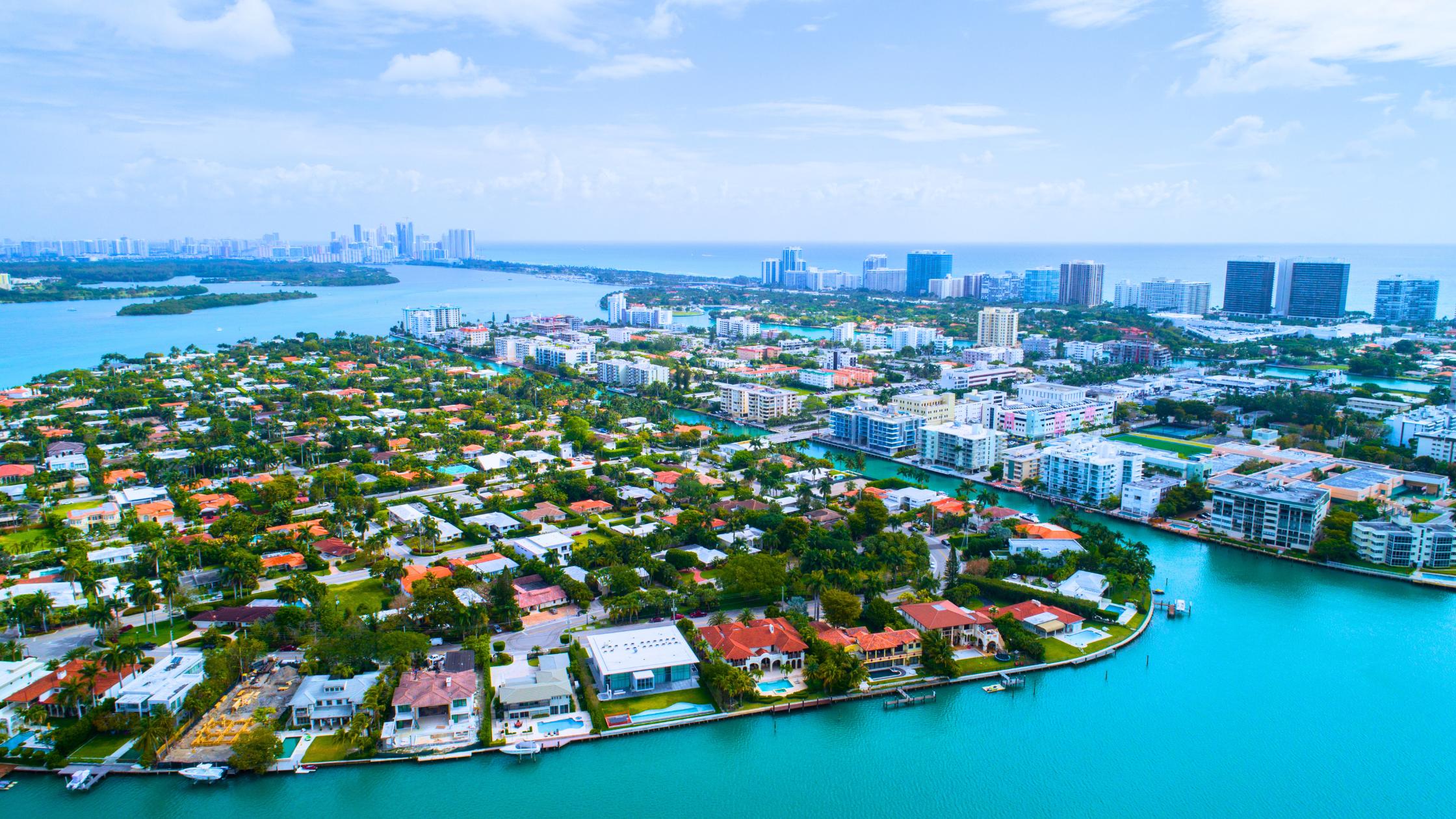
Selling a home in Bay Harbor Islands is a different game from the rest of Miami, and I have watched more than one seller price it like a generic Miami Beach listing and leave real money on the table. This is a two-island community of roughly one square mile total, and the buyers here are not chasing the same things a Brickell condo buyer is chasing. They are chasing a walk to Ruth K. Broad K-8. They are chasing a real sidewalk to a real coffee shop. They are chasing the quiet on West Island and the newer condo product on East Island. If you are selling a home in Bay Harbor Islands in 2026, the pricing playbook has to match what those buyers actually value, not what the wider Miami market is doing.
Here is how I approach it, in the same order I walk sellers through when we sit down before listing day.
Who is actually buying in Bay Harbor Islands right now
The buyer pool in Bay Harbor Islands is narrower than most Miami neighborhoods, and that narrowness is the pricing lever. In my experience, most active buyers fall into three overlapping groups. There are young families relocating specifically for the K-8 school zone, and they will pay a premium for a home inside walking distance to Ruth K. Broad. There are downsizers from Bal Harbour and Surfside who want the walkability without the beachfront price tag or the condo-tower lifestyle. And there are investment buyers looking at the multi-family and older condo stock on the west side of the West Island, where rental yield is stronger.
None of those three groups are moved by the same marketing photo or the same open-house pitch. When you price a Bay Harbor Islands home without knowing which of those three groups your specific address serves best, you end up in the middle where nobody bites. That is how homes here start sitting past ninety days.
What Bay Harbor Islands homes are pricing at in 2026
Bay Harbor Islands has held up better than the wider Miami-Dade single-family market in the last twelve months. The most recent print I trust puts the median sale price for all home types near $1.03 million, up roughly 12 percent year over year, with median listings closer to $1.19 million and a median price per square foot around $750. The waterfront single-family segment continues to run well above $2 million, and higher on the deeper canal lots.
That said, the softening dynamics across greater Miami are showing up here too. The wider Miami-Dade sale-to-list ratio is sitting near 94.68 percent in 2026, roughly 77 percent of active listings are taking at least one price reduction, and the average time to contract has stretched to 91 to 94 days. Bay Harbor Islands is not immune to any of that. If you price a Bay Harbor Islands home on aspiration instead of comps, the market will teach you the same lesson.
Here is a quick side-by-side of how the Bay Harbor Islands segments are performing:
Home Segment | Typical Price Range 2026 | Primary Buyer | Key Pricing Signal |
Interior single-family | $1.0M to $1.6M | Family, school-zone driven | Walk score to Ruth K. Broad K-8 |
Waterfront single-family | $2.0M to $6.0M+ | Move-up, second home | Canal depth, dock, southern exposure |
Newer condo (East Island) | $700K to $2.5M | Downsizer, second home | Building age, amenity mix, milestone-inspection status |
Older condo / multi-family (West Island) | $400K to $900K | Investor, first-time buyer | Reserve funding, rentability, walk to Kane Concourse |
Segment matters more than square footage in Bay Harbor Islands. A 1,900 square foot interior single-family five houses off the school is not competing with a 1,900 square foot waterfront on West Broadview.
The pre-listing pricing framework I run before I set a number
Before I put a number on any Bay Harbor Islands home, I run the same five-step framework. I keep it short on purpose so nothing slips.
- Pull the last twelve months of closed comps on the same island, same segment. East Island and West Island do not always trade in sync, so I split them.
- Adjust every comp for waterfront, school proximity, and lot orientation. A canal lot on Bay Harbor Terrace comps differently from an interior lot two blocks over, even at the same square footage.
- Cross-check the price per square foot against the median trend. If your address should out-perform the $750 median, I want to know exactly which of the three drivers (waterfront, school walk, or newer build) is doing the work.
- Stress-test the number against a soft-appraisal outcome. A 94.68 percent sale-to-list ratio means the appraiser is now the third party at every negotiation table. Coming in over comps without a story creates an appraisal gap you will have to solve later.
- Price for the first two weeks, not the first two months. Listing traffic peaks in the first fourteen days. If we are not priced to attract the strongest three buyers in that window, we are already relying on a price reduction to reset.
That framework is where my 2006 mortgage-origination background actually shows up. Sale-to-list and appraisal risk are financing math, not marketing math, and getting them right at list price saves the deal at closing.
East Island, West Island, and Kane Concourse: the micro-locations that change the comp set
Bay Harbor Islands is small enough that people outside the neighborhood treat it as one market. It is not. The three micro-locations I always separate are:
- East Island interior blocks. Anchored by Ruth K. Broad K-8, Miami Country Day is a short drive, and this is where the school-driven family pricing premium is most concentrated. Higher price per square foot, faster days on market when priced right.
- West Island interior blocks. Quieter, larger single-family lots, older housing stock, more renovation-project inventory. Buyers here are often families or downsizers looking for square footage per dollar. Slower time to contract, deeper negotiation.
- Kane Concourse walk-up strip. The commercial-and-condo corridor connecting Bal Harbour to the islands. Newer condos are pricing on amenity and finish level. Older mixed-use and multi-family price on rental yield and reserve health.
If your listing sits in one of these but the pricing analysis uses comps from another, you are pricing off the wrong market. That is the most common Bay Harbor Islands seller mistake I see.
Presentation and timing moves that add real dollars
Once the number is right, presentation and timing move the last five to eight percent. In Bay Harbor Islands specifically, the moves that matter most are the ones that reinforce the walkable-family narrative.
Pre-listing, I would rather see a seller spend $8,000 to $15,000 on refreshed landscaping, a repaint of front-facing surfaces, and a full deep-clean than $60,000 on an interior update that will not appraise back. Family buyers are walking the sidewalk before they open Zillow. Curb appeal at street level is where the offer starts forming.
On timing, the strongest Bay Harbor Islands seller window is late February through late May, when relocating families are locking in for the next school year. If you are listing in Q3, the pricing has to be sharper because a chunk of that school-driven buyer pool has already committed. A late-summer or early-fall list price that anchors ten percent above realistic comps will sit into Q4, and Q4 is when the price-reduction data hits your listing history.
If a condo, the milestone-inspection and Structural Integrity Reserve Study story matters more than the kitchen backsplash. Buyers in 2026 are reading those documents before they schedule a second showing. If your building is compliant and reserves are funded, put that in the listing narrative. If it is not, the pricing has to acknowledge it before an offer does.
Ready to sell a Bay Harbor Islands home the right way
If you are thinking about selling a home in Bay Harbor Islands in 2026, the pricing decision is the whole game. Get it right on day one, and the walkable-family buyer pool does the work. Get it wrong, and you are chasing a price reduction into a softening market. I live in Coral Gables, I work across all of Miami-Dade, and I would be happy to sit down and walk your specific address through the five-step framework above.
If you want to see the number I would put on your home before you commit to a decision, get in touch here. And if you want the full seller-side playbook I hand every client before we go live, grab the Free Seller's Guide.