

You can walk two blocks west of Louis Vuitton on NE 2nd Avenue, cross one street, and be standing in a neighborhood of 1920s bungalows under oak trees that the City of Miami formally designated as a historic district back in 1988.
That is living in Buena Vista Miami, and most buyers I show the Design District to never realize the neighborhood is there. It is the quietest luxury-adjacent address in the city, and once you understand what the Buena Vista East Historic District designation actually does to a house, you start to see why a certain kind of buyer keeps picking it over the Grove.
I live in Coral Gables, so I am not writing this as a resident. I am writing it as the agent who keeps sending certain clients north on 2nd Avenue instead of south to Coconut Grove, and who has to explain, every single time, what makes this neighborhood different from the glass boxes a block away.
Where Buena Vista Actually Sits
Buena Vista is a City of Miami neighborhood that sits south of Little Haiti and north of the Miami Design District, bounded roughly by NW 54th Street to the north, I-195 to the south, I-95 to the west, and Biscayne Boulevard to the east. The Design District now occupies the southern edge of the land that was historically part of Buena Vista; the two names describe adjacent slices of the same original village. If you drive from the Hermès flagship on NE 39th Street a few blocks north, you cross from retail glass into residential bungalows in under five minutes on foot.
The neighborhood has deep roots. E.L. White homesteaded the area as early as 1892, and the town of Buena Vista was incorporated on August 4, 1924, before being annexed to the City of Miami the following year, per the Buena Vista Wikipedia entry and corroborated by Miami Herald archival coverage. The U.S. Census recorded 9,058 residents in the broader neighborhood boundaries at the 2010 Census. The ZIP codes are 33127 and 33137.
The 1988 Historic District Is the Whole Story
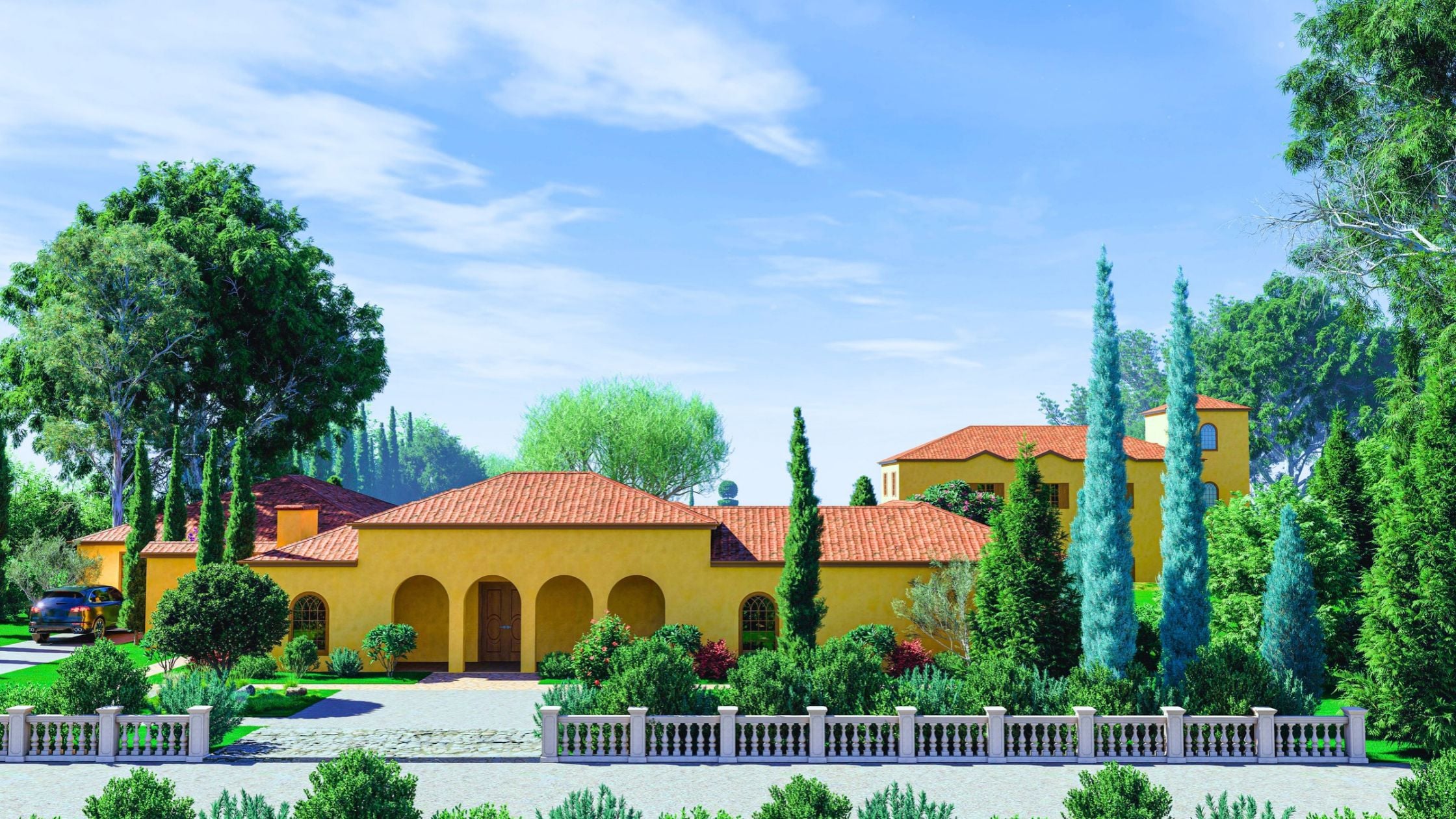
The piece of Buena Vista buyers get fixated on is the Buena Vista East Historic District, and for good reason. According to the City of Miami's Historic Preservation Office, the district was formally designated in 1988 and runs generally between NE 2nd Avenue and N Miami Avenue, from NE 42nd Street to NE 48th Street. The district was built out during the 1920s Land Boom as the Biltmore and Shadowlawn subdivisions, and the housing styles the City lists are Mediterranean Revival, Mission, Craftsman, and Art Deco.
What the designation does, in plain English, is this: if you own a contributing property inside those boundaries, you cannot demolish it, and most exterior changes require review by the City of Miami's Historic and Environmental Preservation Board. That cuts in two directions. It is what makes the neighborhood look the way it does, and it is also why your renovation timeline is going to be longer than a comparable project outside the district. If you want to swap your windows, change your paint color, modify your roofline, or build an addition, you are entering a review process. For buyers who want a 1925 Mediterranean Revival to still look like a 1925 Mediterranean Revival in ten years, this is the feature. For buyers who want to tear down and build a modern spec, this is a wall.
What It Actually Feels Like
Buena Vista East is quiet in a way that surprises people who have only seen the Design District's side of the equation. The streets are narrow, the lots are small, and the canopy is mature. There is no high-rise within the historic district itself, and no commercial frontage along the residential streets. You hear the Design District the way you hear a highway from a park, present but muted. The storefront noise lives on NE 2nd Avenue and NE Miami Avenue; the interior of the grid stays residential.
The food and retail you walk to are Design District food and retail. Michelin-level dining, flagship fashion, Institute of Contemporary Art Miami, which opened its permanent home in the Design District in December 2017 per WLRN. The de la Cruz Collection operated nearby for years. You are not driving to any of this. You are walking the way you would walk to a cafe in Coral Gables, except the cafe might be Le Jardinier and the retail might be Cartier.
Who Buena Vista Actually Fits
I have shown Buena Vista to roughly four types of buyers in the last two years, and three of them have made offers. Here is who the fit is for and who it is not.
It fits:
- Buyers who want walkability to luxury retail and dining without owning the glass-box lifestyle that comes with a Design District condo.
- Buyers coming from markets with real historic-district experience (Charleston, Savannah, parts of Brooklyn, San Francisco) who already know what a design-review process feels like and are not shocked by it.
- Design professionals, gallery owners, and creative directors who want a 1920s house that respects what it is, close to where they already work.
- Second-home buyers who want a Miami foothold inside a walkable urban neighborhood rather than a tower.
It does not fit:
- Buyers who want to buy, tear down, and build modern. The district designation makes that difficult to impossible for contributing properties.
- Families prioritizing single-family lot size and backyard scale. Buena Vista East lots run small.
- Buyers who want a brand-new build with no renovation friction. The housing stock is a hundred years old on average inside the district.
The Finance Side Nobody Mentions
My 2006 mortgage-originator background shows up here because historic-district designation changes the loan math in two concrete ways most buyers do not hear about until they are already under contract.
First, your insurance underwriting is going to be harder. A 1925 frame or Mediterranean Revival with original roof structure, original plumbing stacks, and original electrical is going to be priced differently by Florida carriers than a 2015 build, especially after Florida's property insurance reset. Expect your lender to require a four-point inspection, and expect your carrier to ask questions about the roof, electrical, plumbing, and HVAC that get answered with specific dollar amounts.
Second, your renovation financing options narrow. A standard renovation loan (203(k) on the FHA side, HomeStyle on the conventional side) can still work, but you need a contractor who understands historic-district review timelines, and you need to build those timelines into your loan draw schedule. I have seen renovation loans go sideways because a buyer assumed a four-month project and the actual permit process ran closer to nine.
Neither of these is a reason not to buy in Buena Vista. They are reasons to know what you are walking into before you write the offer, and to work with a lender and a contractor who have done one of these before.
Why Buena Vista Is Having a Moment
The short version is that the Design District's redevelopment, led by Craig Robins and his firm Dacra, pulled the whole area north with it. Dacra Development was formed in 1987 per the Craig Robins Wikipedia entry, and Robins focused on reviving the Design District after launching the AQUA project on Allison Island in 1999. The Design Miami fair launched in the district in 2005. In 2012 the Design District became the only project in Miami-Dade County to receive LEED Gold Neighborhood Development certification.
Everything that happened to the Design District pulled residential demand into the surrounding neighborhoods. Buena Vista East, protected by its 1988 designation, kept its physical character while the land values moved. That is a rare combination in Miami. Most neighborhoods either get appreciation or keep the character. Buena Vista East has, so far, done both.
Buena Vista Was Not Always Protected
The oldest documentation of the neighborhood's early-20th-century character is visual. Flashback Miami's Buena Vista photo essay draws on Miami Herald archival imagery and includes a 1991 Miami Herald photo caption identifying the former Buena Vista town hall at NE 40th Street and NE 2nd Avenue, which later served as a post office, a municipal courthouse, and a tire store. By the late 1960s, the broader neighborhood had been cut off from downtown by I-95 and had declined significantly before the preservation efforts of the 1980s took hold.
That decline-and-rescue arc is why Buena Vista East looks the way it does today. The homes that survived did so because residents organized to protect them, which is what led to the 1988 City of Miami designation in the first place. The Design District's commercial resurgence came later and reinforced the preservation case; it did not create it.
If Buena Vista Is On Your Shortlist
Buena Vista East is not a neighborhood you buy by browsing MLS photos. The character, the renovation friction, and the Design District proximity all have to work for your specific situation. If you are weighing a Buena Vista bungalow against a Grove single-family or a Brickell condo, I am happy to walk you through the actual trade-offs on each. Reach out through the contact page and we can talk through what fits.
If you want a broader view of how Miami's neighborhoods compare before you narrow in, start with my Miami neighborhood lifestyle guide, which covers the main submarkets side by side. For adjacent neighborhoods with their own creative-and-cultural character, see Midtown's galleries and dog-friendly café scene and what living in Wynwood actually looks like. If the architecture is a bigger piece of the appeal than the neighborhood itself, start with my primer on Miami architectural styles from Art Deco to modern luxury. And when you are ready to see what else is open across the city, the Miami Neighborhoods hub is the easiest way to browse.
Check out this article next
