
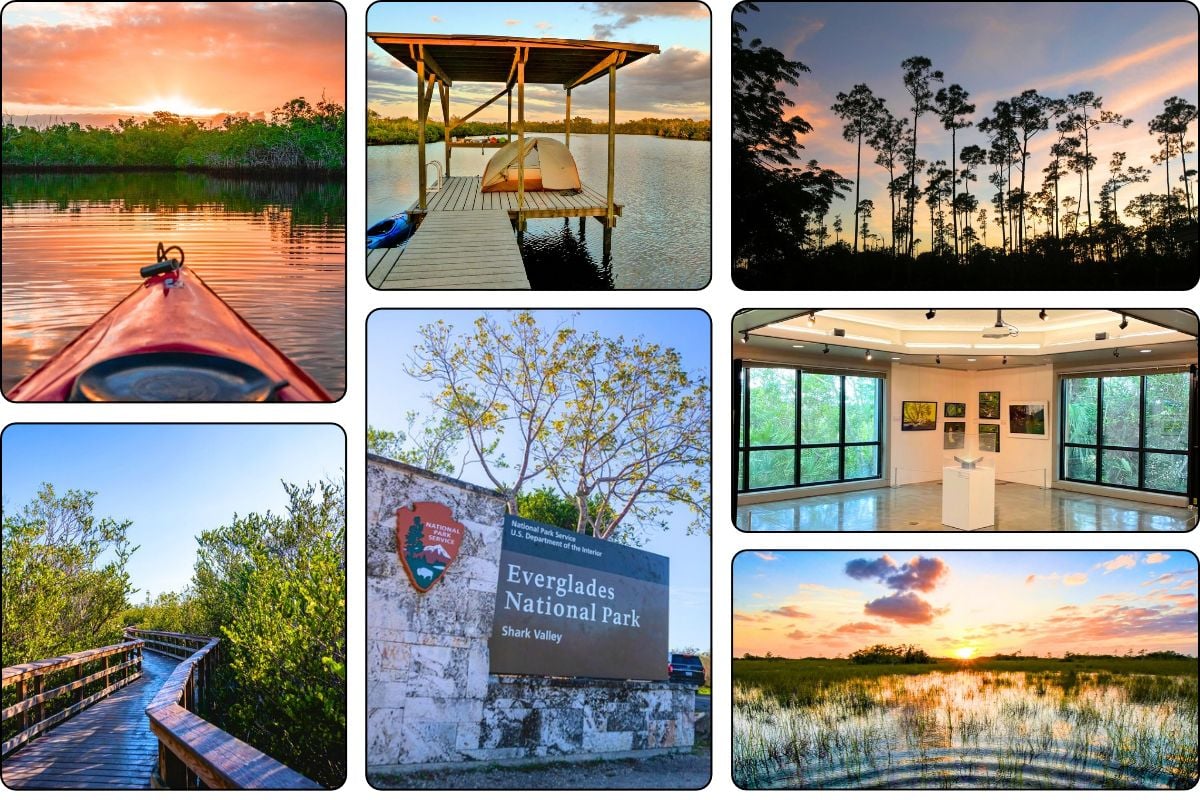
November in Miami is when the single most under-visited popular attraction in the entire county finally comes into its own. The dry season kicks in, the temperatures settle, the mosquito count drops, the water recedes from the summer rains, and the wildlife that has spent five months hidden across the 1.5 million acres of Everglades National Park suddenly becomes extraordinarily easy to see. Alligators pile along the Anhinga Trail boardwalks. Wading birds congregate around the remaining ponds in numbers that look staged. Deer, river otters, and the full roster of South Florida wildlife finally emerge from the summer-wet interior.
Most Miamians have been to the Everglades maybe once in their lives. Most have never been in the right month. November fixes that.
The short version: a 1.5-million-acre UNESCO World Heritage Site that sits 45 minutes southwest of Brickell, protects the largest tropical wilderness in the United States, and runs its best wildlife season specifically in the November-to-April window. $35 per vehicle gets your entire party in for seven days of access across three distinct park entrances, each one unlocking a different slice of the Everglades experience. If you only pick one Miami day trip this November, this is it.
Three Park Entrances, Three Different Everglades
📍 Main Entrance: 40001 State Road 9336, Homestead, FL 33034
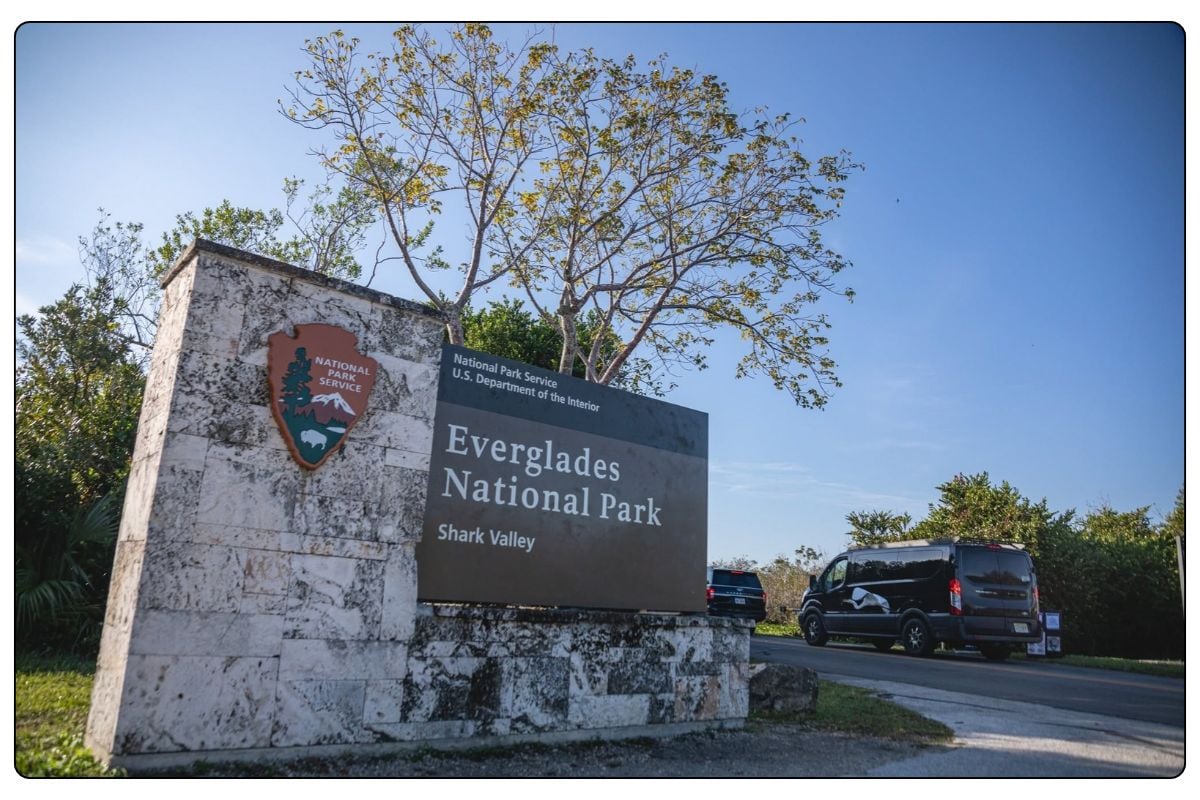
Shark Valley (Tamiami Trail)
The fastest introduction, and the entrance most Brickell and Downtown Miami locals should default to. The 15-mile Shark Valley loop road is a flat, paved asphalt circuit through the heart of the sawgrass prairie, with a 65-foot observation tower at the halfway point that delivers one of the best bird-eye views of the entire ecosystem. Visitors have three options: a two-hour narrated tram tour that runs multiple times daily, a bike rental from the entrance station, or walking the loop. In November, the alligators sun directly along the road, often within feet of passing cyclists. Entrance address: 36000 SW 8th St, Miami, FL 33194.
Royal Palm (Main Entrance / Homestead)
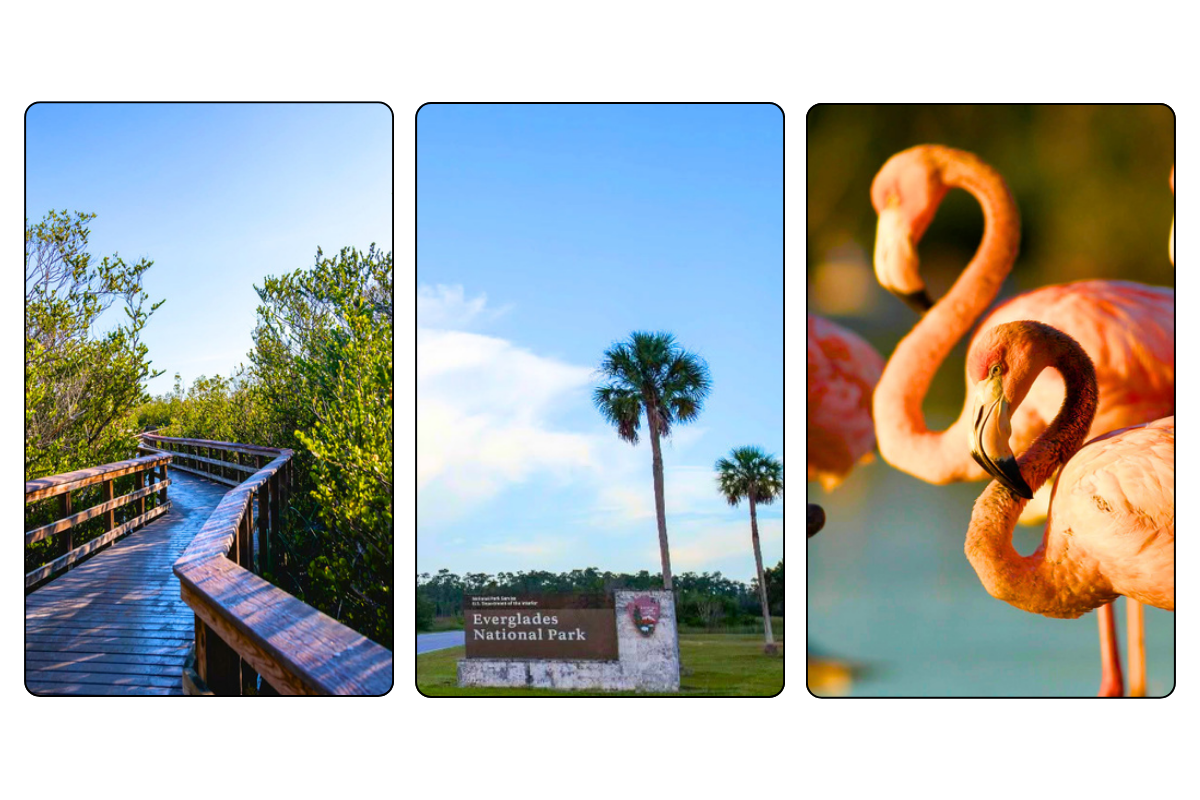
Four miles inside the main park entrance in Homestead sits Royal Palm, home to the Anhinga Trail and the Gumbo Limbo Trail. The Anhinga Trail is a half-mile elevated boardwalk through a slough that functions as a wildlife-viewing concentrator. In November, this boardwalk routinely delivers 20-plus alligators within view at any time, along with anhingas (the signature spear-fishing bird the trail is named after), great blue herons, roseate spoonbills, double-crested cormorants, purple gallinules, and often otters working the water below. It is the single best wildlife-viewing trail in the state of Florida, and in November it hits its peak density.
Flamingo (Southern Tip)
Thirty-eight miles further south from the main entrance sits Flamingo, the park's southern terminus and the gateway to the backcountry waters of Florida Bay. The Flamingo Visitor Center has a marina, kayak and canoe rentals, boat tours into the mangrove tunnels of Whitewater Bay and Cape Sable, and a small cafe. The newly renovated Flamingo Lodge reopened for overnight stays. For visitors who want an actual Everglades day beyond the standard entrance-and-boardwalk experience, Flamingo is the destination.
Why November Is the Right Time to Go
Three reasons.
First, the wildlife. The Everglades run on a hydrological cycle that controls everything you see. Summer rains flood the interior, which disperses wildlife across the entire 1.5 million acres. Then November through April, the dry season kicks in, water recedes to the remaining sloughs and pond-aprons, and every alligator, wading bird, and water-dependent animal in the park concentrates around a dramatically smaller footprint. The wildlife-viewing math changes completely: what in July takes a full day of patient searching to see, in November happens in the first 20 minutes of walking the Anhinga Trail.
Second, the weather. South Florida's dry season brings the kind of weather the Miami tourism campaign actually photographs: lows in the mid-60s, highs in the mid-70s to low-80s, low humidity, long sunny afternoons. The Everglades turns from a two-hour-maximum summer destination into an easy full-day outing, with the kind of comfortable walking weather that lets you actually hit multiple trails.
Third, the mosquitoes. Summer in the Everglades is one of the mosquito-dense environments in the United States, with biting-insect counts that can genuinely end a trip in the first 15 minutes. November drops the counts by 80-plus percent, and dry-season visitors routinely spend hours on the boardwalks without a single bite. Dawn and dusk still require repellent, but the midday experience is dramatically more pleasant.
What to Actually Do (A November Day Plan)
For a classic Everglades day trip from Brickell, Coral Gables, or Miami Beach, the right structure is:
- 7:30 AM: Leave Miami proper (traffic matters more than you think; the midday backup on US-1 South adds 45 minutes).
- 9 AM: Arrive at the main park entrance in Homestead ($35 per vehicle, 7-day pass). Stop at the Ernest F. Coe Visitor Center for a short orientation.
- 9:30 to 11:30 AM: Royal Palm. Walk the Anhinga Trail (allow 60-90 minutes, slowly) and then the Gumbo Limbo Trail. This is the wildlife anchor of the day.
- 12 PM: Drive to Flamingo (about an hour on the main park road, with multiple pullouts and overlook stops along the way). Stop at Pa-hay-okee Overlook and Mahogany Hammock on the way for the elevated prairie views.
- 1 to 3 PM: Flamingo. Lunch at the marina cafe, kayak rental into the mangrove tunnels, or the backcountry boat tour (90 minutes, book in advance).
- 4 PM: Head back north. Stop at Robert Is Here fruit stand in Florida City on the way back for a mango shake and a reset before the drive home.
- 6 PM: Back in Miami.
Why It Resonates With Locals
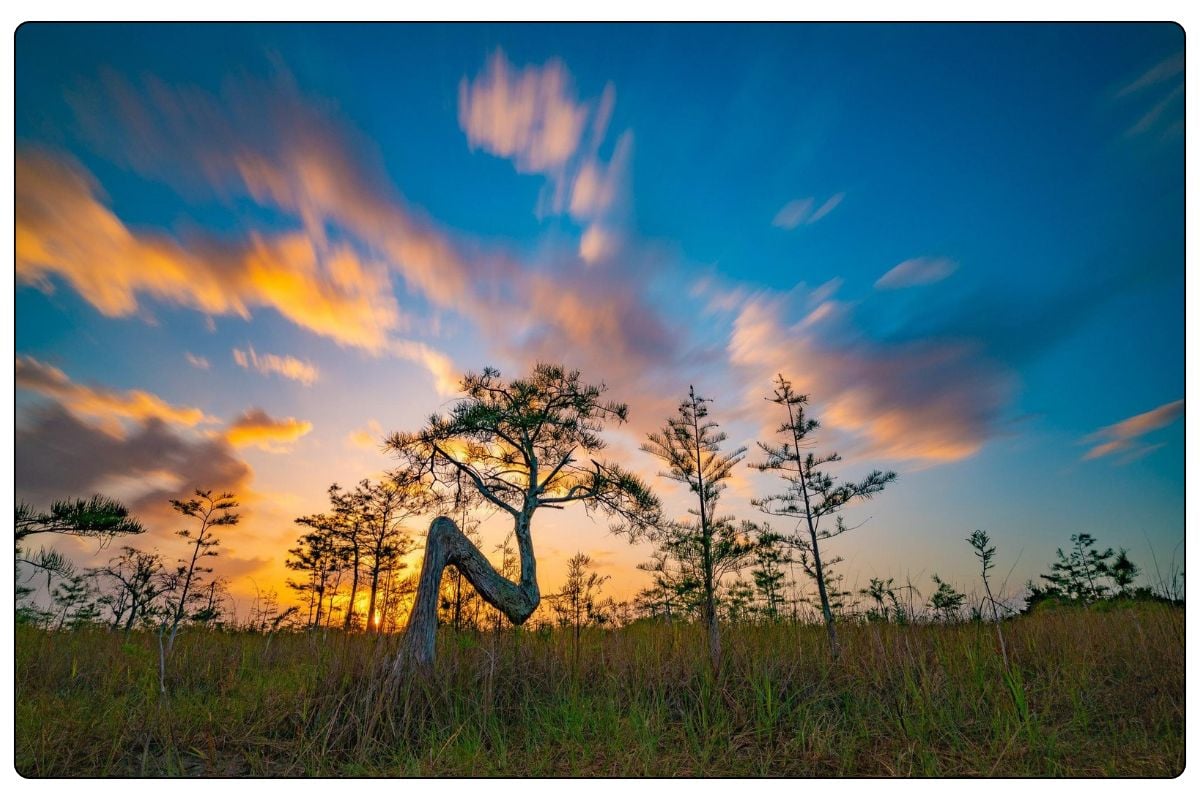
Everglades National Park has a specific appeal that most Miami attractions lack. It is genuinely wild, in a way that no botanical garden, zoo, or state park in the entire southeast United States matches. The 1.5 million acres contain nine distinct habitats (sawgrass prairie, cypress dome, mangrove forest, hardwood hammock, pine rockland, slough, marl prairie, coastal lowland, and marine) and are the only place in the world where American alligators and American crocodiles coexist in the wild.
It is also the only part of greater Miami that genuinely feels like a different world, which is the specific thing Miami Beach and Brickell residents often say they are missing. Dense urban coastal living means the surrounding "nature" quickly turns into golf courses, suburban parks, and manicured preserves. The Everglades is the exact opposite: an actual wilderness, 45 minutes from the city, that scales to a serious full-day or multi-day trip without ever feeling anywhere near Miami.
Miami residents who grow up here often skip the Everglades until adulthood and then become regulars once they realize what's actually there. November is the right month to make that transition.
Living in Southern Miami-Dade
Living in Palmetto Bay, Pinecrest, Cutler Bay, Kendall, or Homestead puts the Everglades, Biscayne National Park, and the Florida Keys all within a 30-to-60-minute drive, and residents of the corridor benefit from:
- Direct, fast access to Everglades National Park, Biscayne National Park, and the Florida Keys without hitting Miami proper's north-south traffic
- Larger single-family lots with genuine yard space, mature trees, and pool-friendly setbacks
- The strongest agricultural and farm-to-table food supply in South Florida (Fruit & Spice Park, Pinto's Farm, The Berry Farm, Robert Is Here, Knaus Berry Farm, local strawberry farms)
- Family-friendly neighborhoods, top-rated schools (Palmer Trinity, Palmetto High, Pinecrest Elementary), and a slower daily pace
- Significantly lower price-per-square-foot than Brickell, Coral Gables, or Miami Beach
For buyers who want access to serious outdoor and natural amenities without giving up Miami access, the southern Miami-Dade corridor is one of the strongest value markets in the county. Living closer to the Everglades is one of the lifestyle differentiators that makes this corridor feel genuinely different from the rest of Miami.
Miami's Best November Day Trip
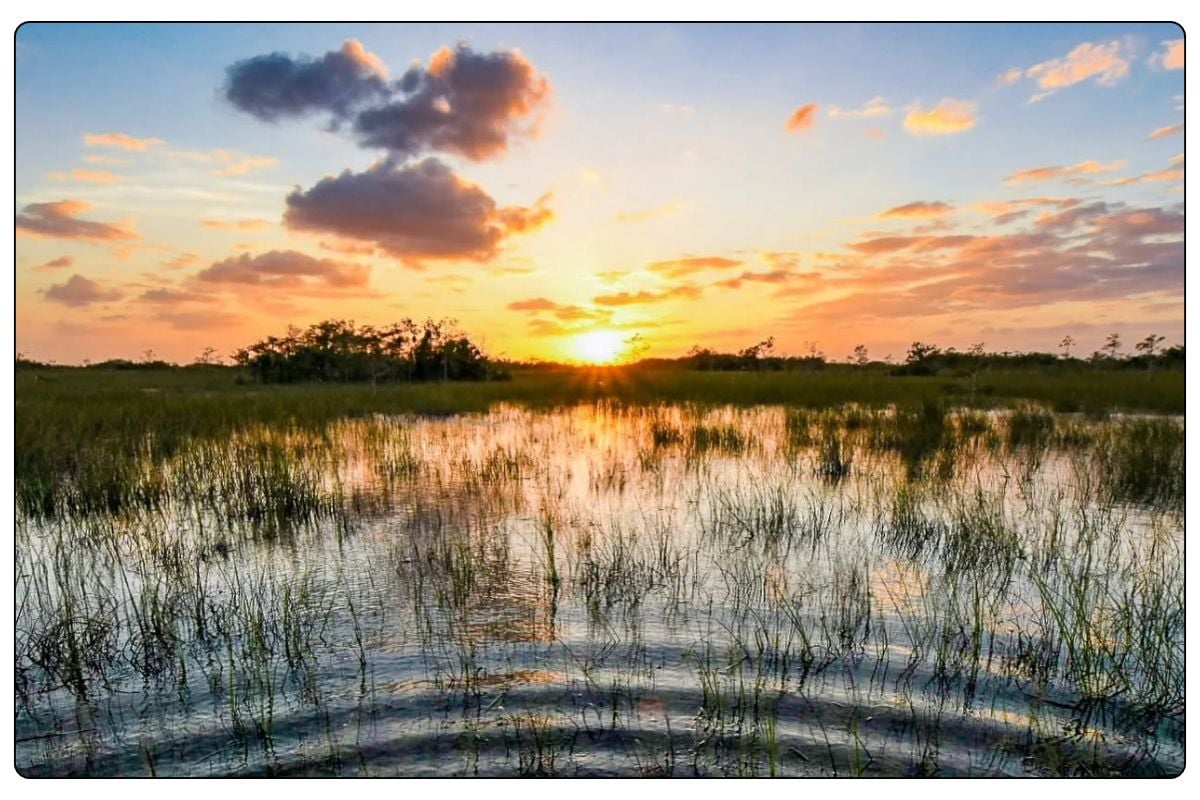
The Everglades is the rare Miami attraction that hits its peak specifically in November: the wildlife is at its most visible, the weather is at its most cooperative, and the park's ranger-led programming resumes full schedules for the dry season. Between the alligators and wading birds at the Anhinga Trail, the sawgrass prairie views from Shark Valley, and the mangrove tunnels at Flamingo, November is the month.
Bring the family for a Shark Valley tram tour. Hit Royal Palm for the Anhinga Trail at opening. Book a Flamingo kayak afternoon for a date day. And leave with a genuine understanding of why the Everglades is the single most important natural asset in all of South Florida, sitting quietly 45 minutes southwest of Miami waiting for you to finally give it a serious day.
Check out this article next