
Shenandoah is one of the quietest neighborhoods in the City of Miami and one of the oldest. Living in Shenandoah Miami means early-century architecture, a renovated central park, walkable grid streets, and a location sitting almost exactly between Brickell to the east and Coral Gables to the west. For buyers who have shopped in either of those two neighborhoods and found the inventory thin or the prices unforgiving, Shenandoah is the pocket that keeps turning up on my clients' Miami neighborhood shortlists. Here is a complete guide to how the neighborhood is laid out, what the housing stock looks like, where it fits in the City of Miami, and what to know about its historic character.
Where Shenandoah Sits in the City of Miami
Per the Florida International University Shenandoah Community-Based Research draft, Shenandoah sits between SW 8th Street (Calle Ocho) to the north, SW 22nd Street (Coral Way) to the south, SW 12th Avenue to the east, and SW 27th Avenue to the west. The neighborhood is primarily inside Miami's 33135 and 33145 ZIP codes.
Shenandoah was established by developers from Virginia, which is where the neighborhood's name comes from. Residential subdivisions multiplied through the 1920s Florida real estate boom, and the FIU research draft describes the neighborhood today as the "highest concentration of 1920s and 1930s homes in all of Florida." For an architecture-first buyer, that single line is the entire pitch.
Per the FIU community research, Shenandoah's population was 20,981 as of the 2010 Census and 2011 to 2015 ACS data, with a majority Hispanic population and a high share of foreign-born residents. The eastern edge of the neighborhood (SW 12th Avenue) is low-density, single-family residential.
How Shenandoah Is Usually Broken Down
Shenandoah is not one monolithic grid. Local real estate practice and community research materials usually describe three informal sub-pockets. These are working labels rather than official city boundaries, so treat the table below as a framework for comparing streets, not as a legal map.
Sub-pocket | Rough east-west range | What tends to show up on the ground | Who it fits |
East Shenandoah | SW 12th Ave to SW 17th Ave | Oldest 1920s stock, closer to Calle Ocho and the Brickell commute | Downtown-commute, early-architecture buyers |
Central Shenandoah (around Shenandoah Park) | SW 17th Ave to SW 22nd Ave | 1920s to 1940s mix anchored by Shenandoah Park | Families, park-first buyers |
South Shenandoah | SW 22nd Ave to SW 27th Ave | Later vintage mix, transition toward Coral Way | Coral Gables-leaning buyers |
The eastern sub-pocket is organized enough that there is an active Miami Historic East Shenandoah Homeowners' Association, which operates separately from the broader Miami Shenandoah Neighborhood Association that covers the whole neighborhood.
Architecture and Housing Stock
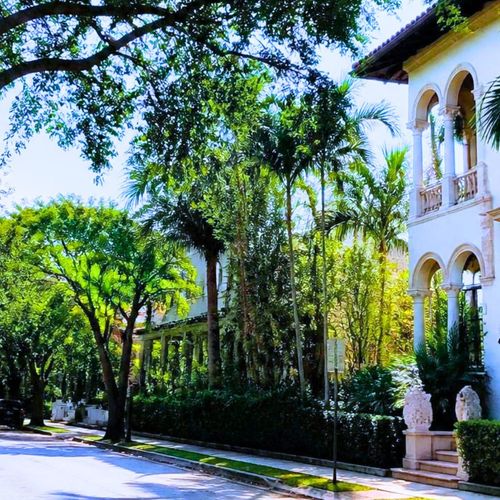
Shenandoah's housing stock is predominantly single-family Mediterranean Revival, Mission, Craftsman, and Florida bungalow homes from the 1920s and 1930s, with pockets of mid-century and later construction mixed in. Barrel-tile roofs, warm stucco exteriors, keystone and oolite accents on original homes, arched windows, small front porches, and tiled interior entries are the architectural tells.
The character question matters because the housing stock is largely irreplaceable. Early-century architecture of this scale, concentrated across contiguous blocks under a mature tree canopy, is not being built anywhere in Miami in 2026. Each original home that is restored holds the character; each tear-down that is replaced with a modern spec house erodes it. The absence of a formal City of Miami historic district overlay (more on that below) means both outcomes are legally possible today.
For any specific target home, pull the exact property record through the Miami-Dade Property Appraiser before reading a listing's square footage line as fact.
Carrying Costs: What the Primary Sources Actually Say
Per the Miami-Dade Property Appraiser's 2026 proposed millage rate comparison, the City of Miami's 2026 proposed municipal millage is 7.7416 mills (operating 7.1080 + debt service 0.2536 + DDA 0.3800), compared to Coral Gables at 5.5590 mills. The City of Miami's municipal tax rate is higher than Coral Gables's, so municipal millage is not where Shenandoah carries a cost advantage over its western neighbor.
Where Shenandoah's carry picture does break differently is in HOA exposure. Single-family inventory in the neighborhood almost always carries zero HOA, versus the master policy, maintenance fees, and SB-4D reserve exposure attached to a Brickell or Edgewater condo. A Shenandoah owner owns a lot and a structure outright, which is a different financial profile than a condo share, and that is one of the first distinctions I walk every buyer through when they are deciding between neighborhoods.
Flood zone and windstorm insurance exposure varies by property within Shenandoah. Pull a flood-zone determination through FEMA's Map Service Center on any specific target property before underwriting the carry.
The Historic-Character Question
Shenandoah is a historic-character neighborhood, but as of the latest check against the City of Miami's historic preservation listings, Shenandoah is not currently designated as a City of Miami historic district. The practical implications matter for anyone evaluating the neighborhood.
Grassroots community effort has been pushing toward designation for years. Community Newspapers reported in 2015 that the Miami Shenandoah Neighborhood Association had launched a grassroots push to pursue City of Miami historic district status, with the group then "in the exploration, information and assessment stage." As of recent primary-source review, that effort has not resulted in a formal district designation. Individual homes can still be individually designated as historic properties through the Miami-Dade process, which is a separate track; the Miami-Dade Property Appraiser's historic considerations guidelines spell out that process.
What this means on the ground today: exterior renovation flexibility in Shenandoah is closer to the broader City of Miami standard than to Coral Gables's design review process. In my experience, that is a feature for buyers who want flexibility on exterior changes without clearing a Coral Gables-style review, and it is a risk for buyers counting on neighboring teardowns being blocked. If a formal district designation moves forward in the future, review processes on exterior changes could tighten.
Always verify the exact historic-property status of any target address with the City of Miami Planning Department before writing.
Shenandoah Park and the Lifestyle Around It
Shenandoah Park is the center of gravity for the neighborhood, and the City of Miami has invested in it recently. Per the City's Shenandoah Park Improvements project page, the park now includes a new aquatic facility with an Olympic-size pool (25 yards by 50 meters), two new basketball courts, a new soccer field, improvements to the existing ball field, exercise equipment, and a central library plaza. The FIU research draft also lists tennis and racquetball courts, a playground, fitness classes, and a reservable community center at Shenandoah Park, plus Bryan Park on SW 13th Street with tennis courts, playground, and community programming on the north side of the neighborhood.
Other parks threaded through the Shenandoah grid, per the FIU draft, include the South Shenandoah Mini Park, Swannanoa Mini Park, and the Coral Way Community Center Playground. The Shenandoah Branch Library on SW 19th Street is part of the Miami-Dade Public Library System.
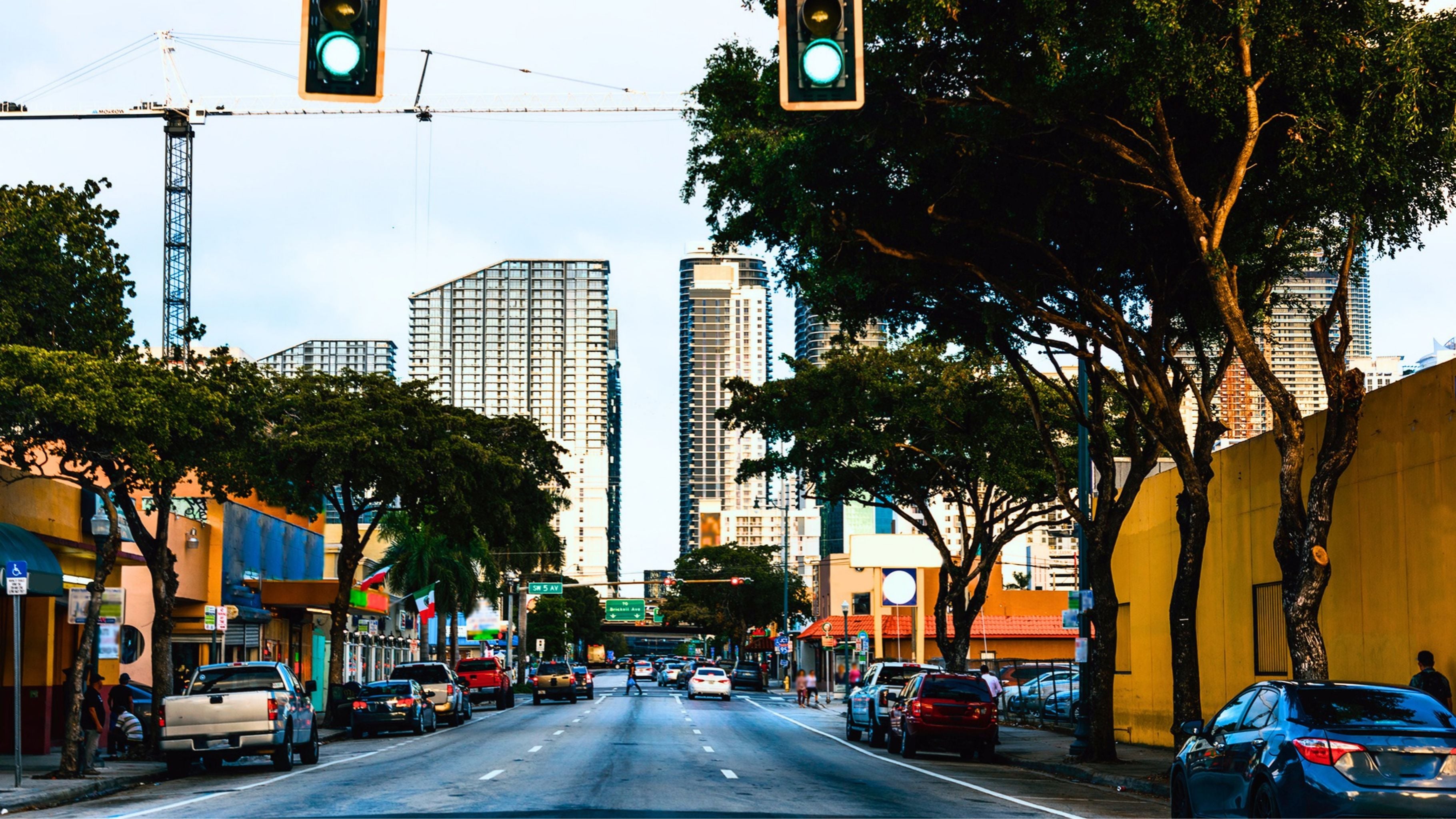
The cultural adjacency to the north is Little Havana. Calle Ocho is at the Shenandoah northern boundary, which puts the neighborhood inside one of the strongest independent-restaurant corridors in the city. The historic Maximo Gomez (Domino) Park sits right at the north edge of the Shenandoah grid, on Calle Ocho. For deeper neighborhood context, a guide to Little Havana's cultural scene and real estate is the natural sibling piece. For a comparable early-century Miami neighborhood further north, a guide to historic Miami Shores is the closest peer in character and vintage.
Within a ten-minute drive from Shenandoah, Brickell, Coral Gables, Coconut Grove, Vizcaya, and MIA are all reachable, which is one of the quieter location advantages of the neighborhood.
Where Shenandoah Fits in the Miami Market Today
Coral Gables single-family inventory is tight, Brickell is almost entirely condo, Coconut Grove single-family pricing has moved beyond many first-time Miami buyers, and Shenandoah is one of the remaining pockets of 1920s and 1930s single-family stock inside the city limits. The neighborhood sits adjacent to the Brickell commute to the east and the Coral Gables address to the west without being either of them, which is both the opportunity and the character of the place. For buyers I work with who have been priced out of their first two neighborhood choices, Shenandoah is almost always on the shortlist that comes next.
For how the broader Miami market is moving at the ZIP level, the Miami Association of Realtors monthly residential statistics are the primary source to check every month, and they publish ZIP-level data that lets Shenandoah's 33135 and 33145 trend lines be read directly. For the broader lifestyle picture across every Miami neighborhood, the Miami neighborhood lifestyle pillar is the full map, and the Miami Neighborhoods hub is the broader navigation.
Thinking About Living in Shenandoah? Let's Talk.
If Shenandoah is on your Miami shortlist and you want someone on the ground to walk you through the sub-pockets, run the carrying-cost math, and research the historic-property status of a specific target address, reach out through my contact page.
Check out this article next