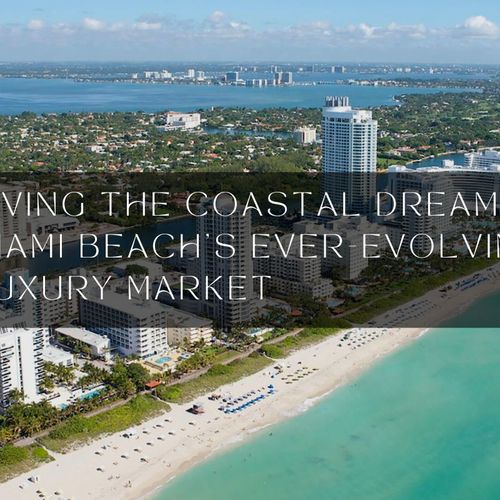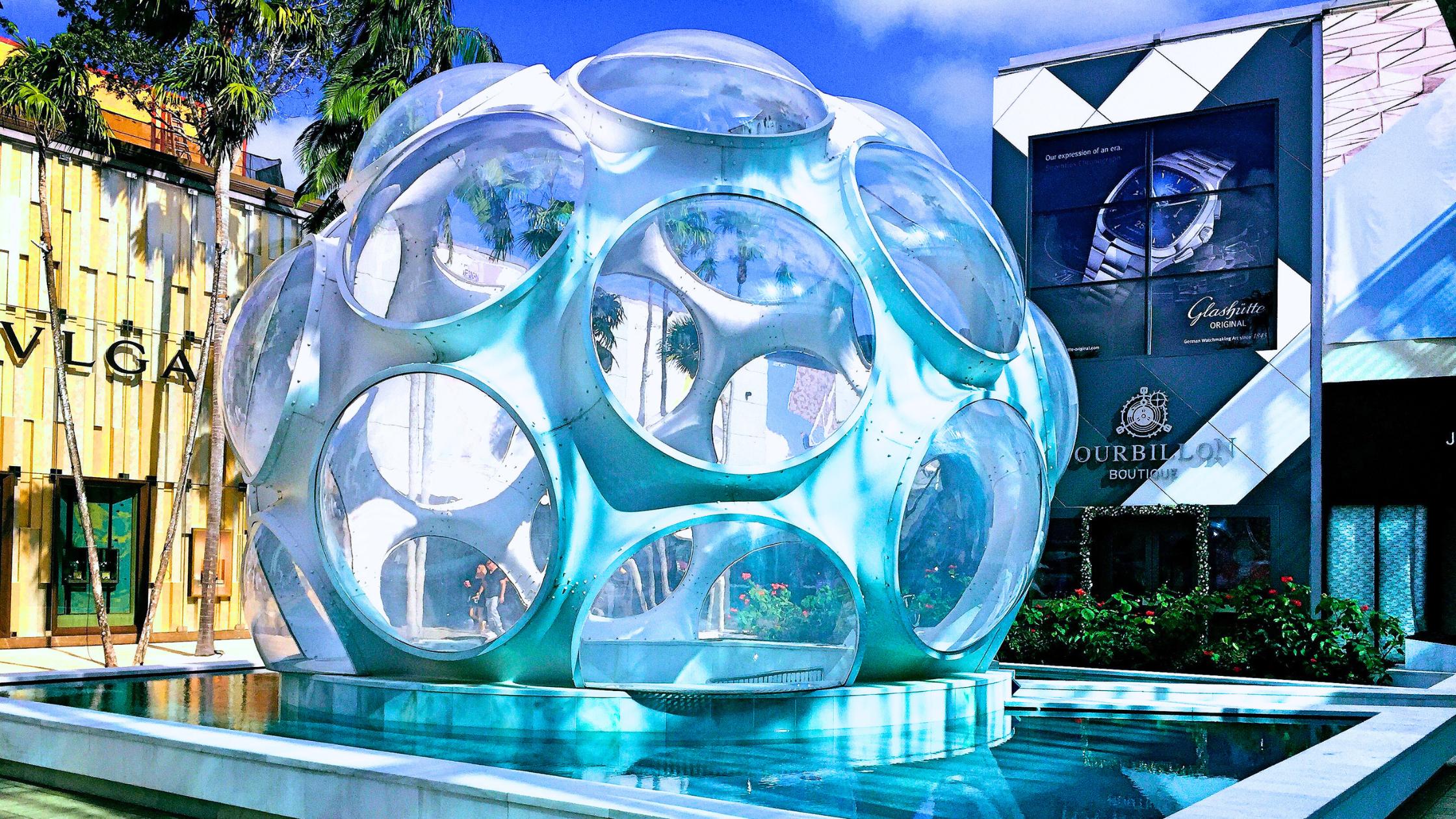
The Design District I walked through five years ago and the Design District I walked through last Tuesday are not the same place. On paper it was a luxury shopping stop with Louis Vuitton, Prada, and a Michelin roster of restaurants. Today, Miami Design District real estate 2026 is a live-work-shop neighborhood with roughly 1,000 residential units in the pipeline, Pritzker-winning architects on the drawings, and buyers writing $3.7M and up deposits on projects that will not deliver until 2029.
That is the shift. Not more shopping. A neighborhood.
I have been watching this pocket for a while, and 2026 is the year the residential thesis stopped being a pitch deck and started being a construction schedule. Below is what actually changed, what is being built, who is writing checks, and how I would underwrite a Design District pre-construction deposit if the money were mine.
What actually changed: from Louis Vuitton stop to full-time neighborhood
For 15 years the Design District was Craig Robins' project: consolidate the blocks, put luxury retail on the ground floor, program the streets with public art, get the tourists in. That worked. It worked so well that the neighborhood ran out of runway to stay a Saturday destination.
The residential push closes the loop. When you can walk out your door for a Michelin dinner, a gallery opening, and a padel court on the same block, the neighborhood stops being a stop and starts being an address. That is the pitch behind roughly 1,000 units now moving through pre-construction, sales, or vertical work.
Two data points from this year make the shift concrete. In January, New York retail landlord Jeff Sutton's Wharton Properties, together with Pebb Capital and Lane Capital, paid $72.5 million for the seven-story Design 41 building at 112 NE 41st Street, Sutton's first ever Miami acquisition and a serious tell that outside institutional capital is treating this pocket as a long-hold. In June, MIRAI Design District secured an $85 million construction loan and broke ground on Kengo Kuma's first mixed-use project in the United States, a Class A office plus retail floating-lantern building that anchors the daytime economy the residential product needs.
Retail was the appetizer. Residential and office is the entree.
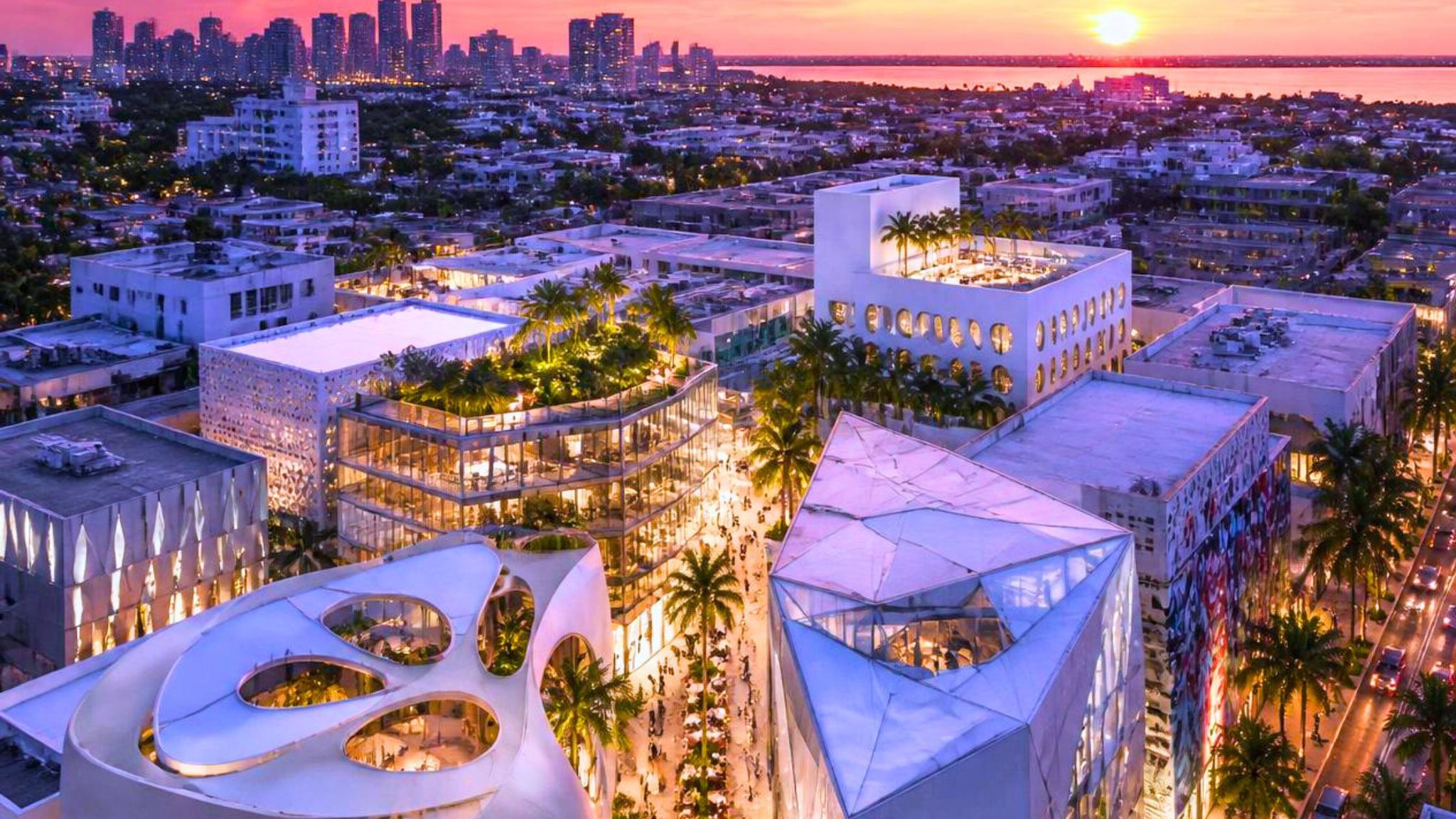
The five projects reshaping the Design District residential map
Here is the pipeline as of August 2026. I am giving you the specs I actually care about, not the marketing.
Miami Design Residences by David Chipperfield. The Pritzker Prize winner's first residential tower in the neighborhood. A 25-story building with 143 condos priced from $1.8 million, with Fouquet's opening its first Miami hotel on the north parcel (12 stories, 85 keys, 20 condo-hotel units). Sales launched in April. Wallpaper unpacks the fluted ceramic façade and the interior articulation if you want the design read. Development team is Miami Design District Associates, Fort Partners, Raycliff Capital, and Constellation Hotels.
Kempinski Residences Miami Design District. Kempinski's first branded residence in the United States. Two 20-story towers at 3801 and 3883 Biscayne Boulevard, 132 residences ranging from 2,100 to 3,100 square feet, plus six townhomes and 17 owner-only guest suites. Interiors by New York's Rockwell Group. Pricing starts at $3.7 million. Delivery is Q4 2029. Short-term rentals are not allowed, which matters if you are underwriting this as anything other than a pied-a-terre or primary. DaGrosa Capital Development Partners is the sponsor.
MIRAI Design District. Not condos, but critical to the residential thesis. Kengo Kuma's mixed-use project with roughly 41,000 square feet of Class A boutique office plus 16,000 square feet of high-street retail and hospitality. Groundbreaking happened in June with an $85M construction loan. Completion targeted for 2028. This is the building that makes the "work" leg of live-work-shop real.
Jean-Georges Miami Tropic Residences. Sitting at the nexus of the Design District, Midtown, and Wynwood at 3501 NE 1st Avenue, 49 stories, 338 residences, delivered by Terra and Lion Development Group with Yabu Pushelberg interiors and Arquitectonica architecture. Delivery in 2029. Signal on conviction: Chef Jean-Georges Vongerichten himself bought a $3.5 million condo in the tower bearing his name earlier this year. When the branded chef puts his own capital in the stack, that is worth noting.
Cassi and other multifamily. Cassi is a Class A rental product under construction that will absorb some of the walk-to-work demand from MIRAI and the existing retail workforce. The Design District's official neighborhood tracker is the best place to watch opening dates as they lock in.
Who is actually buying (and what they are paying for)
Three buyer profiles are writing the checks I am seeing on these products.
The first is the primary-home luxury buyer who wants a walkable Miami address without Brickell density or Miami Beach flood exposure. They are trading a Coral Gables historic house or a Coconut Grove villa for a Kempinski or Miami Design Residences floor plan because the daily lifestyle is now good enough to compete with a single-family home.
The second is the pied-a-terre buyer, often bi-coastal, who wants a lock-and-leave Miami base with concierge, valet, and a private restaurant on-site. Kempinski's no-rental rule filters this pool. That is a feature for owners who do not want a hotel-hallway experience, not a bug.
The third is the long-hold investor betting that a $1.8M to $5M entry today prices in a neighborhood that will be structurally different in 2029. This is the finance side of my brain talking: at these prices, on these deposit schedules, on these delivery timelines, the underwriting is not a rental-yield play. It is a basis-versus-2029-comparable-set bet.
How I would underwrite a Miami Design District pre-construction deposit
Here is a comparison of the three condo products against the underwriting factors that matter, so you can see the trade-offs at a glance.
Project | Price from | Delivery | Rental rule | Deposit posture |
Miami Design Residences (Chipperfield) | $1.8M | 2030 target | Standard condo | Structured deposit schedule |
Kempinski Residences | $3.7M | Q4 2029 | No short-term rentals | Sponsor-tiered deposits |
Jean-Georges Miami Tropic | Contact sales | 2029 | Standard condo | Structured deposit schedule |
My finance-side checklist on any of the above, in the order I would run it:
- Basis-per-square-foot versus 2029 comparable set. Take the fully-loaded delivery price against Edgewater and Midtown branded product delivering in the same 2029-2030 window. If the Design District basis prints in line with that set, you are paying for neighborhood upside, not paying up.
- Deposit schedule cash cost. Pre-construction condos in Miami commonly tie up 40 to 50 percent of the purchase price over the build cycle. Model the opportunity cost of that capital at your own required rate of return. Do not just assume the appreciation clears it.
- Sponsor and lender depth. Look at the sponsor's balance sheet, the construction lender, and the equity partners. A $3.7M price is only meaningful if the project actually delivers.
- Exit optionality. Standard condo docs give you a straightforward resale. A no-rental building is a smaller exit pool but a different (often cleaner) buyer pool. Neither is wrong. Know which one you are buying.
This is exactly the read I bring to every pre-construction conversation, and it comes from my mortgage-originator background dating to 2006. Pre-construction is a finance product wearing a real estate suit. Treat it that way.

Where the risk sits, and where it does not
Delivery risk is real. Three of the residential projects here will be delivered in 2029 or 2030. A lot can move in three years: rates, construction cost, absorption in the wider Miami luxury market, geopolitical demand for South Florida branded products. That is why deposit schedules and sponsor depth matter more than the marketing brochure.
Neighborhood risk is lower than most people assume. The Design District has almost a decade of operating retail, a mature public-art program, an office anchor breaking ground, and institutional retail capital just committed at $72.5M. That is a maturing neighborhood, not a speculative one.
Flood and insurance risk is worth its own conversation. The Design District sits inland of Biscayne Bay with meaningfully different flood-map exposure than a Miami Beach or a Sunny Isles product. Not immune. Just different. Talk to your insurance broker before you sign anything.
Miami Design District Real Estate 2026 FAQ
Is the Miami Design District a good real estate investment in 2026? The pocket has a real structural thesis in 2026: roughly 1,000 residential units in the pipeline, Pritzker-caliber architecture, an office anchor breaking ground, and a retail base that has already matured. That said, most of the residential product does not deliver until 2029 or 2030, so it is a long-hold play, not a flip. The underwriting has to work on basis-per-square-foot against the 2029 comparable set, not on rental yield.
What are the newest condo projects in the Miami Design District? The three headline residential projects in the current pipeline are Miami Design Residences by David Chipperfield (143 units from $1.8M), Kempinski Residences Miami Design District (132 residences from $3.7M), and Jean-Georges Miami Tropic Residences (338 units at the Design District, Midtown, and Wynwood nexus). MIRAI Design District, the Kengo Kuma mixed-use building, adds the Class A office anchor.
When will Kempinski Residences Miami Design District be delivered? The current delivery target is Q4 2029. That is a three-year build window, which is standard for a two-tower branded product of this scale. Confirm the exact delivery clause in your purchase agreement, because sponsors typically include a delivery-window range and specific outside-date protections.
How much do Miami Design District condos cost? The current entry point in the new pre-construction product is around $1.8 million at Miami Design Residences by Chipperfield. Kempinski Residences pricing starts at $3.7 million. Jean-Georges Miami Tropic pricing is available on request at sales. Resale product in the surrounding blocks is limited given the shift is largely new construction.
Can you Airbnb a Kempinski Residences Miami Design District unit? No. Kempinski Residences explicitly does not allow short-term rentals. If short-term rental income is core to your underwriting, this is not the right project. If a lock-and-leave primary or pied-a-terre in a quiet, hotel-free building is what you want, that is exactly what this rule protects.
What to do next if Miami Design District real estate 2026 is on your list
If this pocket is on your shortlist, the practical move is to shortlist two or three of the pre-construction products above and get real numbers on the deposit schedule, the delivery window, and the sponsor stack before the current sales pricing rolls up. Chipperfield launched in April. Kempinski revealed new interior and amenity renderings in July. Jean-Georges Tropic is actively selling. Waiting six months on a rising Miami luxury tape has a real cost.
If you want to walk the neighborhood, see the Chipperfield model unit, and pressure-test the Kempinski numbers against a comparable Edgewater or Midtown product, that is what I do for a living. I live 15 minutes away in Coral Gables, and I have run the underwriting on every project in this pipeline. Compare it to my preconstruction breakdowns in Edgewater, read my general primer on Miami's pre-construction condo process, deposits, timelines, and risks, and see how the Design District product stacks against my ultimate guide to Miami's newest luxury condo developments and the adjacent Midtown art and lifestyle scene. If you are earlier in the process and want the buyer-side playbook first, grab my Free Home Buyer Guide. When you are ready to talk numbers on a specific unit, reach out directly.
Check out this article next