
The building sells the unit in most Miami neighborhoods. In Wynwood, the product type sells the unit, and most sellers do not know which product they own. The neighborhood trades around $609 per square foot at the median while new construction asks $850 to $1,100, and that spread is not noise. Selling a home in Wynwood in 2026 means selling one of three distinct products that share one zip code: a converted loft, a boutique new build, or a short-term-rental condo. Each has its own buyer, its own financing path, and its own comp set. I write mortgages back to 2006, and the first question I ask a Wynwood seller is never "what do you think it is worth." It is "which of the three markets are you actually in." Get that answer right and the pricing takes care of itself. Get it wrong and you spend six months discovering the difference.
What the Wynwood market is actually doing in 2026
Let me set the numbers. The median home price in Wynwood is running around $1.2 million in early 2026, with condos trading from roughly $350,000 to $3.65 million, per MIAMI REALTORS statistics and current listing data. Per-square-foot pricing spans from around $609 at the market median to $850 to $1,100 for new construction. No other Miami neighborhood carries a wider gap between its established stock and its new product.
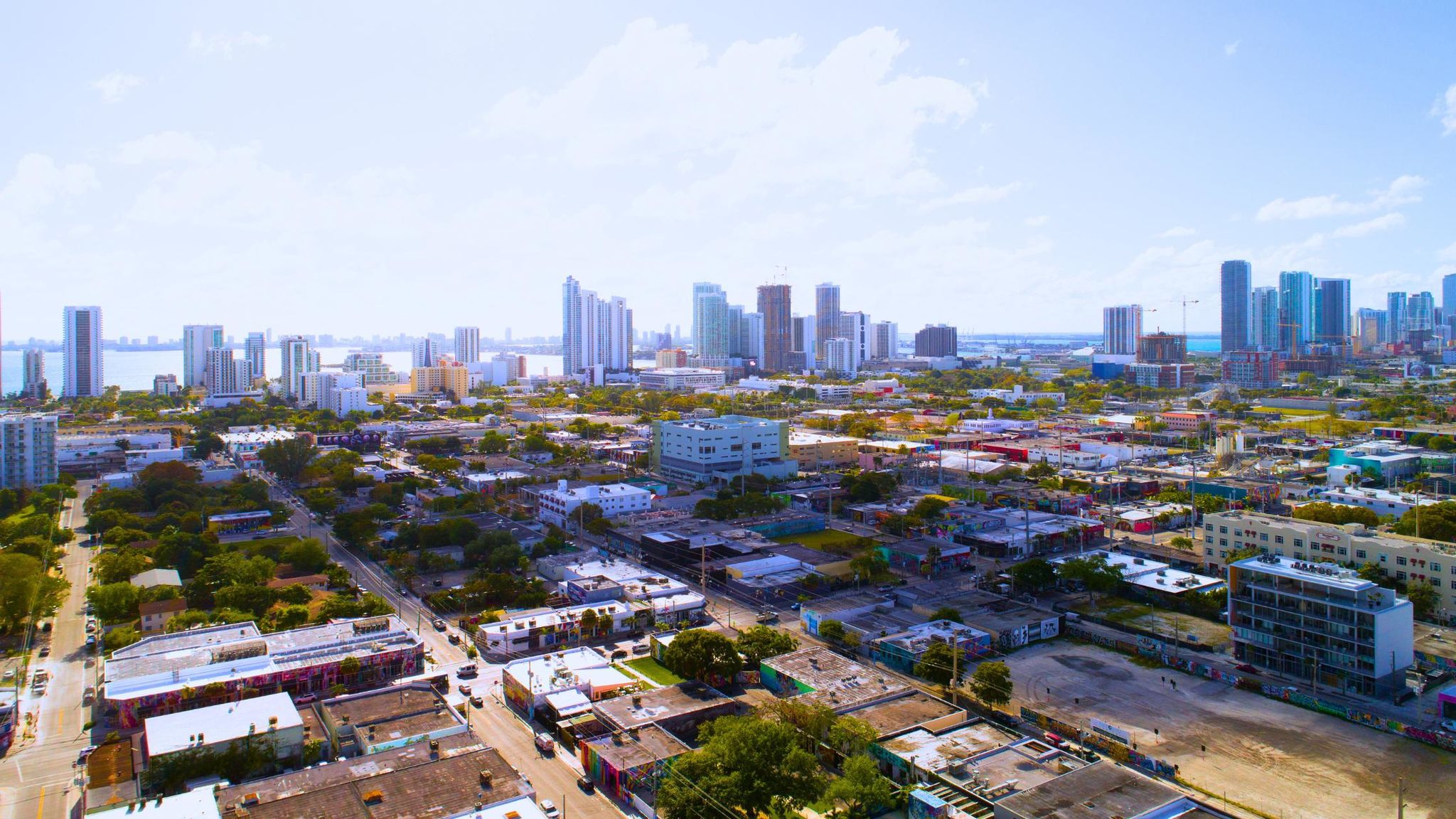
The reason is that Wynwood's residential market is young. The neighborhood spent decades as a warehouse district, became the gallery capital of the South, and only in the last decade started converting that identity into a place people actually live. The residential stock records that history in layers: a thin tier of true loft conversions in former industrial buildings, a growing tier of boutique new builds, and now a wave of purpose-built short-term-rental product, with projects like DUOS Wynwood and The Cloud One Residences bringing hundreds of new units into the pipeline. The Wynwood Business Improvement District tracks the development activity block by block, and it is worth a look before you list, because your competition set changes quarter by quarter.

For sellers, the pipeline cuts the usual two ways: it validates the neighborhood and it competes for your buyer. The Wynwood twist is that most of the new product is STR-flexible, which splits the buyer pool in a way I will come back to, because it is the single most important thing a Wynwood seller needs to understand before setting a price.
The three Wynwood products and who buys each
Before pricing anything, place your unit in the right market. There are three, and they barely overlap.
- The loft conversion. A former industrial or warehouse building converted to residential, with the features new construction cannot replicate: 14-foot ceilings, exposed concrete and brick, oversized windows, freight-elevator character. The buyer is a design-conscious end-user or creative-industry professional who wants the real thing. Supply is structurally capped, because they are not making more old warehouses. That scarcity is your pricing power.
- The boutique new build. A modern mid-rise with an amenity deck, smart-home finishes, and standard residential zoning. The buyer is an end-user or conventional investor comparing you against Midtown, Edgewater, and Downtown on price-per-foot and amenities. This is the most conventionally priced of the three products; my Edgewater bayfront condo guide covers the closest residential cross-shop east of the neighborhood.
- The STR-flexible condo. Purpose-built or zoned for short-term rental operation. The buyer is an investor underwriting nightly rates and occupancy, not comps. These units price off cash flow, and the financing runs through non-QM, DSCR, and investor products rather than conventional loans.

The expensive mistake is coming across product lines. A loft seller who prices off an STR building's per-foot number is anchoring to a cash-flow model that has nothing to do with their unit. A new-build seller who anchors to a loft sale is pricing scarcity they do not have.
The zoning and rental-rights story that moves Wynwood value
Wynwood sits inside a special zoning overlay, the Wynwood NRD, under the Miami 21 zoning code, and the neighborhood's live-work-play DNA means rental rights vary building by building in ways that directly move resale value. Before you list, pull three answers.
First, what your building's declaration says about minimum lease terms. A building allowing 30-day rentals prices differently than one requiring 12-month leases, because the investor pool underwrites them differently.
Second, whether your building has active or permitted short-term rental operation under the City of Miami's short-term rental rules. The ordinance details matter, and buyers' attorneys will check them.
Third, your building's agency status. Here is the finance-side trap most Wynwood sellers never see coming: a building with heavy STR activity can drift into non-warrantable or condotel classification under Fannie Mae's condo project standards, which closes the conventional financing door for your buyer even if your specific unit has never rented a single night. Your neighbors' Airbnb calendars can shrink your buyer pool. Know the building's rental mix before your buyer's lender discovers it for you.

The flip side is real too. If your building is warrantable, long-lease, and majority owner-occupied, that is a marketing line in a neighborhood where buyers assume everything is an Airbnb. Say it explicitly in the listing description.
How to price each product in 2026
Product | Typical per-foot range | Buyer pool | Time to sell | Pricing logic |
Loft conversion | Premium over neighborhood median, unit-specific | Design-conscious end-user + creative professional | 60 to 120 days | Scarcity-priced against the last 24 months of loft sales only |
Boutique new build resale | Near neighborhood median, amenity-adjusted | End-user + conventional investor | 90 to 150 days | Comp-priced against Wynwood, Midtown, and Edgewater new-build resales |
STR-flexible condo | Wide range, cash-flow driven | Investor underwriting nightly revenue | 90 to 180 days | Income-priced off documented STR revenue, not comps |
Three notes on using the table.
Loft sellers should extend the comp window to 24 months and comp only against other true conversions, because the sample is thin and the product is scarce.
New-build resellers must account for the pipeline. Buyers touring your unit are also touring pre-construction sales galleries with stretched deposit schedules, so position on what you have that they do not: a finished unit, at a known price, closing in 30 days instead of 2028.
STR sellers should walk into the listing with a documented revenue package: twelve months of actual nightly revenue, occupancy, and operating costs pulled from platform statements. Investor buyers price documentation. Undocumented revenue claims price as fiction.
The pre-list playbook for Wynwood sellers
Days 1 to 14: Classify your product and pull the building's paper. Confirm which of the three markets you are in. Pull the declaration's lease-term rules, the building's rental mix, the warrantability status, and the standard resale packet: financials, insurance, assessment history. For buildings three stories and up, Florida's SIRS and Milestone Inspection requirements apply in Wynwood like everywhere else in the state.
Days 15 to 45: Build the product-specific package. Loft sellers: document the character. Ceiling heights, window dimensions, original structural elements, any historic designation on the building. New-build sellers: assemble the amenity and fee comparison against the two nearest competing buildings. STR sellers: compile the twelve-month revenue package with platform statements, not spreadsheet summaries.
Days 45 to 75: Interview agents who have closed your product, not just the neighborhood. An agent with three loft closings understands scarcity pricing. An agent with three STR closings understands cap-rate conversations. Those are different skills. Ask for product-specific transaction history, then build the comp set inside your product line only.
Days 75 to 90: Price and launch with the neighborhood story attached. Wynwood's galleries, restaurants, and street life are the reason your buyer is looking here instead of Brickell. The context in my Wynwood lifestyle guide is exactly what an out-of-town buyer needs attached to the listing, and the adjacent creative corridor in my Midtown galleries and creative-energy guide frames the wider district. My Free Seller's Guide covers the broader pre-list documentation sequence.
What Wynwood sellers get wrong every time
- Comping across product lines. The loft, the new build, and the STR condo are three markets, not one.
- Not knowing the building's rental mix before listing, then losing a financed buyer when the lender classifies the building as condotel.
- Hiding weak STR revenue behind projections. Investor buyers price twelve months of platform statements and discount everything else.
- Ignoring the pre-construction alternative when pricing a new-build resale, and losing the buyer to a sales gallery with a three-year deposit schedule.
- Selling the unit without selling the neighborhood. Wynwood buyers are buying the street life, and the citywide context in my guide to where to live in Miami helps relocating buyers place the Arts District on the map. Listings that skip the neighborhood read like they could be anywhere.
Frequently asked questions
How long does it take to sell a condo in Wynwood in 2026? By product: well-priced lofts move in 60 to 120 days, new-build resales in 90 to 150, and STR units in 90 to 180 depending on documented revenue quality.
What is a loft conversion actually worth in Wynwood? More than the neighborhood median per foot when the character is real and documented, because the supply is structurally capped. Price against the last 24 months of true conversion sales only, not against new construction.
Do short-term rentals hurt my resale value in Wynwood? They cut both ways. STR flexibility adds an investor buyer pool, but a building with heavy STR activity can lose Fannie Mae warrantability, which closes conventional financing for end-user buyers. Know your building's mix and market to the pool that can actually close.
How does the new construction pipeline affect my Wynwood resale? It brings buyer traffic and validates pricing at the top, but it competes directly with new-build resales. Position on certainty: a finished unit, a known price, and a 30-day close against a 2028 delivery date.
Is now a good time to sell in Wynwood? For lofts, yes; scarcity holds pricing power while the neighborhood's profile rises. For new-build resales and STR units, timing depends on how your building stacks against the arriving pipeline and your documented revenue. Run the product-specific analysis before deciding.
Ready to sell in Wynwood?
If you own in the Arts District and you are thinking about selling in the next 12 months, the earliest thing worth doing is a product classification and comp review. It costs nothing and it determines everything downstream. If you want a second set of eyes on your building's rental mix, your warrantability status, or your product-line comp set, reach out through my contact page and we will run it together.
Check out this article next