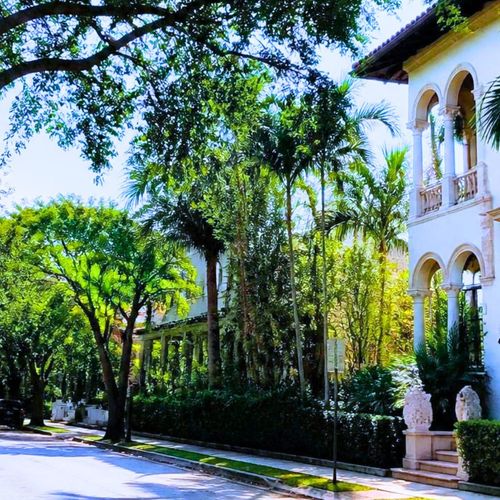

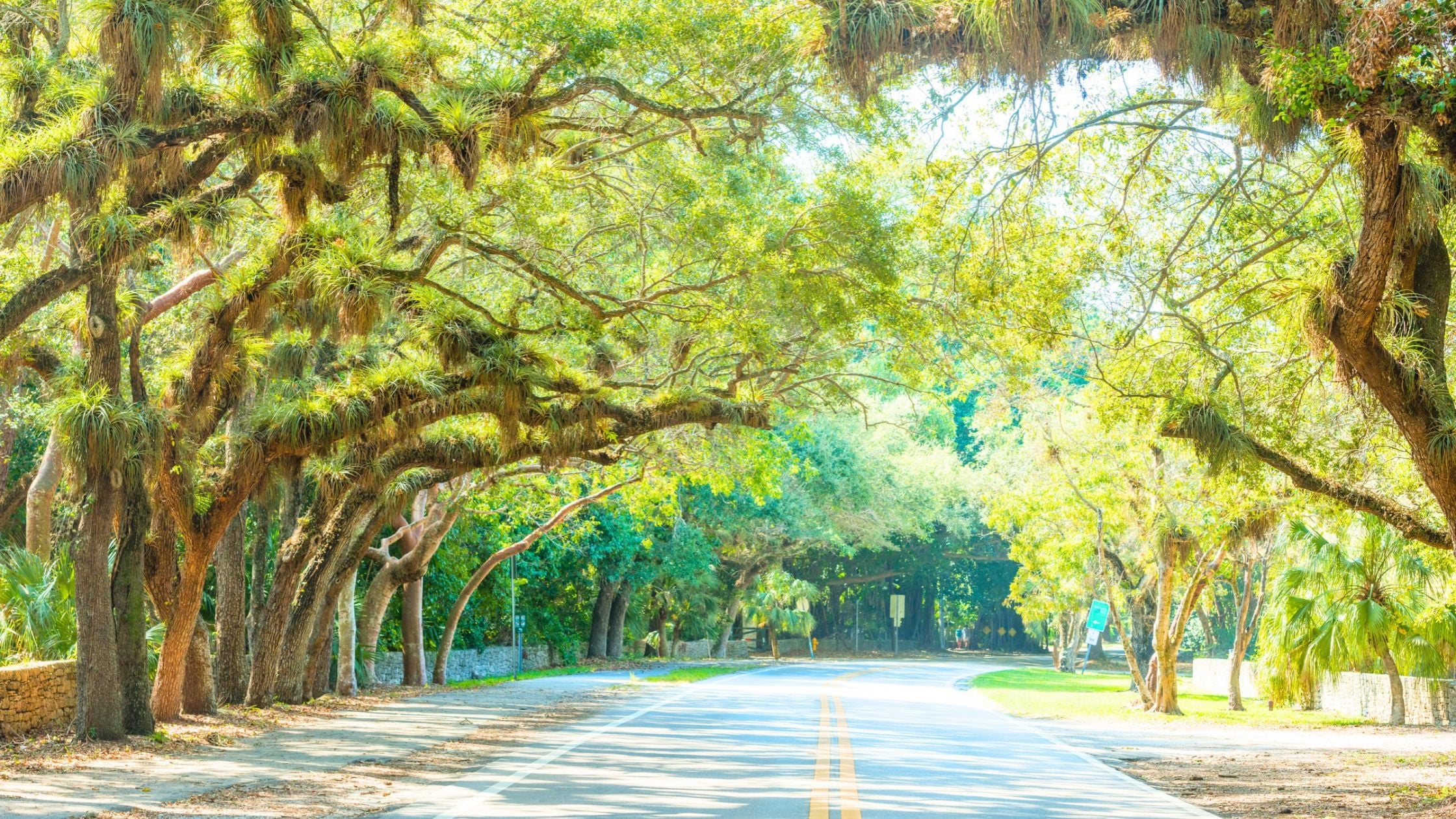
Silver Bluff Miami is the Coral Way sub-neighborhood almost nobody writes about and almost nobody who lives there wants to leave. I drive through it most mornings coming back from the gym to Coral Gables, and after a few years of pointing clients at it, I have learned to notice three things: the oak canopy on the side streets, the 1920s cottages that still carry the original roof lines, and how quiet the blocks get once you turn off the main corridors. Here is what Silver Bluff actually feels like on a Saturday walk in 2026, how the neighborhood got here, and why I keep sending Brickell and Coconut Grove buyers across US-1 to look at it.
Where Silver Bluff Actually Starts and Ends
Silver Bluff is not a stretch of road. It is a specific rectangle inside the City of Miami, sub-neighborhood of the larger Coral Way neighborhood, and it is smaller than most people realize when they first drive it. The boundaries are tight and easy to walk off:
- North: Coral Way (SW 22nd Street)
- East: SW 17th Avenue
- West: SW 27th Avenue
- South: South Dixie Highway (US-1)
Those four edges wrap less than a square mile of blocks between Brickell (to the northeast), The Roads (directly north across Coral Way), Shenandoah (northwest), and the North Grove edge of Coconut Grove (south across US-1). Those boundaries come straight from the Coral Way entry on Wikipedia, which still carries the clearest public map of the sub-neighborhood edges. If you are standing at SW 22nd Avenue and SW 24th Street on a Saturday morning, you are in the middle of it.
Silver Bluff sits at roughly 10 feet of elevation, which is unusual for coastal Miami, and that elevation is not an accident. The neighborhood takes its name from a large oolite limestone outcrop that underlies part of what used to be Brickell Hammock. The Miami Rock Ridge entry on Wikipedia, citing standard USGS data, puts the ridge at roughly 23 to 28 feet above sea level at its highest and specifically references Silver Bluff as a named oolite outcrop along it. That is the ridge Silver Bluff is named for.
The 1926 Annexation Still Shapes the Blocks
Silver Bluff was its own incorporated city before it was a sub-neighborhood of Miami. The small City of Silver Bluff was annexed into the City of Miami in 1926, which makes 2026 the exact centennial of the annexation. That history is still visible on the ground.
Most of the single-family housing stock inside Silver Bluff dates to the 1920s and 1930s. You will see Mediterranean-revival cottages with barrel-tile roofs, early masonry bungalows with small footprints and deep lots, and later infill from the 1950s and 1970s layered over the original grid. The architectural style is dense enough that it belongs in the same conversation as the oldest pockets of The Roads and Shenandoah just north of Coral Way, and it is why I usually walk clients down to see the Silver Bluff grid at the same time I show them Miami's older styles. If you want the broader context on what Miami built in that era, Jose's piece Miami architectural styles from Art Deco to modern luxury is the right pillar to read before you drive the neighborhood.
Centennial markers aside, the practical result for a 2026 buyer is simple: Silver Bluff houses are often smaller on paper than nearby new-construction comps, sit on lots that were platted when SW 22nd Avenue carried a different kind of traffic, and reward buyers who know how to read a cottage versus a teardown. Verify the year-built, additions, and permit history on the Miami-Dade County property-appraiser site before you fall in love with a specific block.
What a Saturday Morning Walk Looks Like in 2026
The lifestyle hook is why I like Silver Bluff for a certain kind of buyer. If you walk the neighborhood on a Saturday, you notice the same four things every time.
The oak canopy on the north-south interior residential streets carries actual shade. That matters in Miami, and it is one of the reasons the walking blocks feel ten degrees cooler than Coral Way itself.
The Coral Way corridor on the north edge of the neighborhood is lined with family-run Cuban and Latin breakfast and lunch spots. Walk a few blocks east or west and you are picking from the kind of counter service that has been in the neighborhood for decades, not pop-ups.
The street grid is small enough to walk end to end in under an hour. From the SW 17th Avenue edge over to SW 27th Avenue is a comfortable mid-morning loop with a coffee stop in the middle, and most of the north-south streets slow traffic through residential design rather than signage.
The newer street-art and public-art presence is picking up. In September 2026, Hoodline reported that a Cuban-heritage mural called "Rooted in Cuba, Rising in America, Strength in Gratitude" was being completed at 1900 SW 25th Terrace, commissioned by the La Victoria Miami Collection and executed by Miami-based architect and artist Jerónimo Gauna. Confirm it is up before you plan a walk around it, but as of early fall 2026 it is one of the first explicitly visual landmarks the neighborhood has given itself.
The Underline Hammock Trail at Your Back Door
The single biggest 2026 lifestyle change for Silver Bluff is not inside the neighborhood. It is immediately south of it.
The Underline is the linear park Miami built underneath the Metrorail. According to the Wikipedia entry on The Underline, the stretch that passes through The Roads, Shenandoah, and Silver Bluff is Phase 2, the Hammock Trail. According to The Underline's own phase page, Phase 2 runs 2.14 miles from SW 13th Street to SW 19th Avenue, just south of the Vizcaya station, and opened April 24, 2024. Phase 1 (Brickell Backyard) is 0.5 miles from the Miami River to SW 13th Street and opened February 26, 2021. Phase 3 extends 7.36 miles from SW 19th Avenue to Dadeland South and is scheduled for completion in 2026, with current status still being updated on The Underline website.
In practical terms, that means a Silver Bluff resident can step out the southern edge of the neighborhood, cross US-1 at the right place, and plug straight into a continuous walking, cycling, and jogging corridor that connects north into Brickell and south toward Coconut Grove and the Gables. For a neighborhood whose housing stock predates the car-dependent decades, that trail is not a nice-to-have. It is why I think the next five years of Silver Bluff look different from the last five.
If waterfront and walkability are the trade-offs you are weighing on a Miami neighborhood search, Jose's pillar read Best Miami neighborhoods for walkability and daily convenience is the right companion to this piece.
Who Buys in Silver Bluff and Why
The buyers I bring to Silver Bluff tend to be in three categories.
First, Brickell renters and condo owners who hit a budget ceiling and want to trade a 1,200-square-foot condo for an actual lot with a cottage on it. The drive into Brickell is roughly fifteen minutes in typical traffic, and the shift from vertical living to oak-canopy living is immediate.
Second, Coconut Grove shoppers who are not willing to pay the Grove premium for a smaller house and like that Silver Bluff sits a bridge away from the Grove dining and marina scene without the price mark-up.
Third, Miami locals who already know Coral Gables and The Roads and are looking at Silver Bluff as a value play on the way to a longer-term move. If you are coming into Miami from out of town and still mapping the broader city, Jose's pillar guide Where is the best place to live in Miami: a neighborhood lifestyle guide will put Silver Bluff in context against the other neighborhoods on the table.
If this neighborhood is on your shortlist, let's talk. I live in the Gables, drive through Silver Bluff most mornings, and I will walk you off the main corridors so you can see the Saturday-morning version of the neighborhood instead of the drive-by one.
Ready to walk Silver Bluff yourself?
If you want a real walkthrough of Silver Bluff and the three streets I would focus on first, reach out directly and we will set a Saturday-morning window. If you are still earlier in the process and want the broader context on neighborhoods and the Miami buying journey, start with the free Miami home buyer guide and the full Miami neighborhoods hub.
Check out this article next