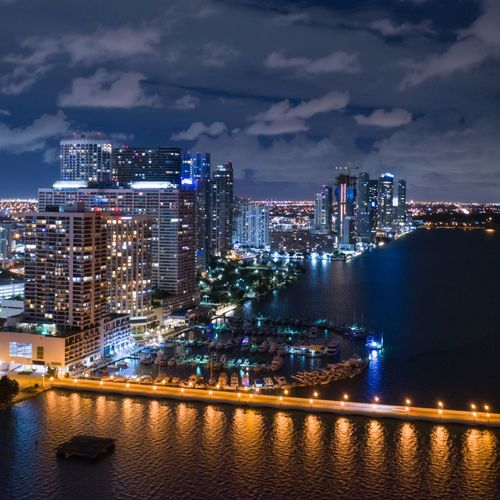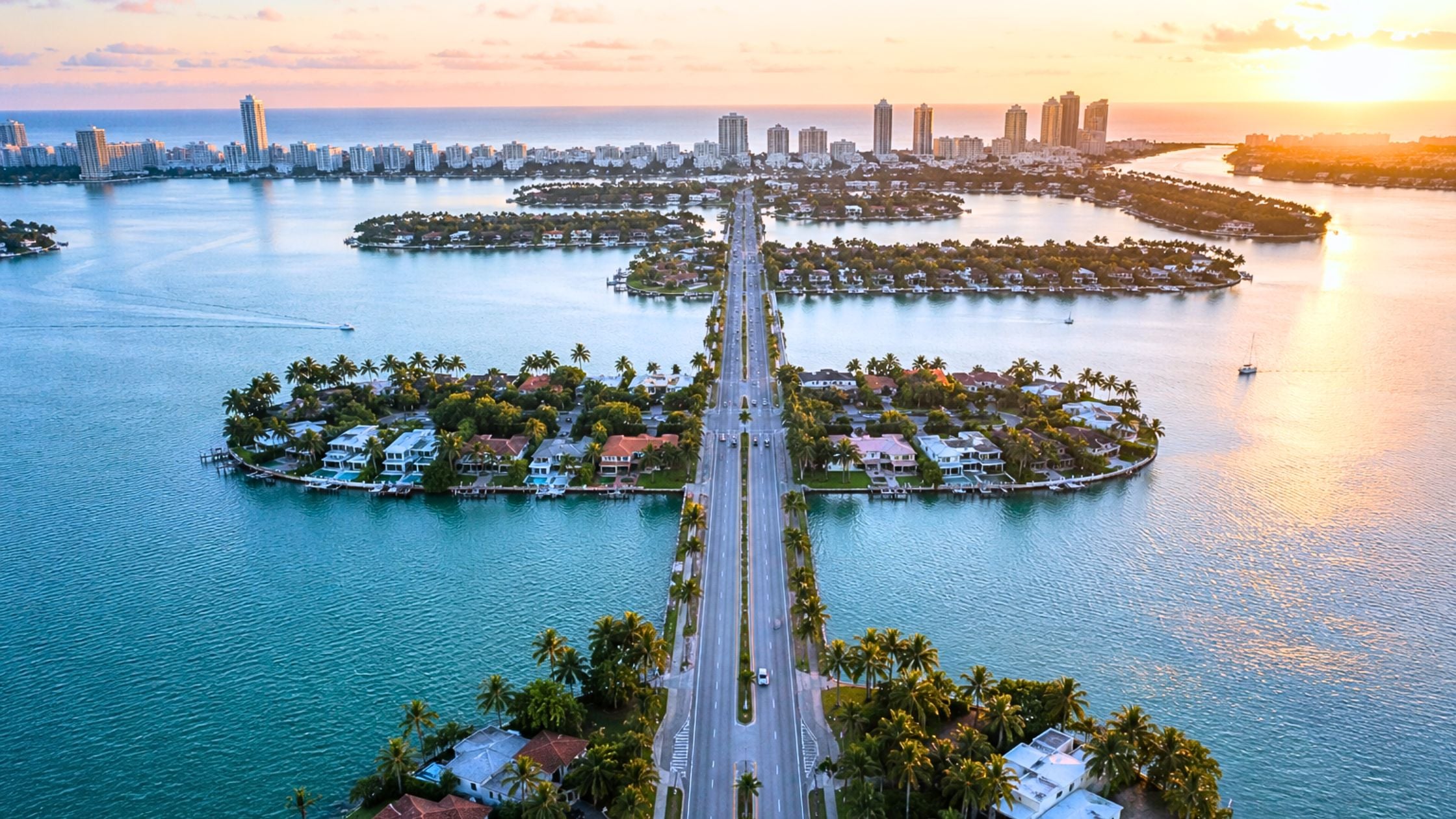
There is a moment about halfway across the Venetian Causeway somewhere between San Marino Island and Rivo Alto where you stop walking and just stand there. The bay opens up on both sides, wide and still. To the west, the Brickell skyline looks close enough to touch, glass towers catching the early morning light. To the east, low-rise Miami Beach stretches quietly across the horizon. Between you and all of it: nothing but open water, a steady salt breeze, and the distant sound of a drawbridge lowering back into place after letting a sailboat through.
That moment tells you more about the Venetian Islands than any listing description ever could.
These five man-made islands strung across Biscayne Bay between Miami's Edgewater neighborhood and Miami Beach are one of the most quietly extraordinary places in South Florida. Not flashy in the way Star Island is. Not tourist-facing like South Beach. Not dense like Brickell. The Venetian Islands are a neighborhood, a real, lived-in, deeply local one that happens to sit on some of the most beautiful water geography in the state. And if you are seriously considering Miami real estate, they deserve more than a passing glance.
A Quick Orientation: Five Islands, One Causeway
The Venetian Causeway is the older of Miami's two central bay crossings, originally completed in 1926 as part of the city's first major development boom. It runs about 2.6 miles from NW 15th Street in Edgewater west to Dade Boulevard in Miami Beach, crossing five islands in between. From west to east: Di Lido, San Marino, Rivo Alto, Belle Isle, and San Marco.
Cars pay a toll ($1.75 as of this writing). Pedestrians and cyclists cross free a detail worth knowing if you plan to walk it, which you should.
The islands themselves are not large. Rivo Alto, for instance, is barely a quarter mile wide at its broadest point. But what each island lacks in size it makes up for in residential intimacy. These are neighborhoods where people actually know their neighbors. Where the same dog walkers appear at the same hour every morning. Where a for-sale sign going up causes a genuine stir because it happens so infrequently.
Walking the Causeway: What You Actually Experience
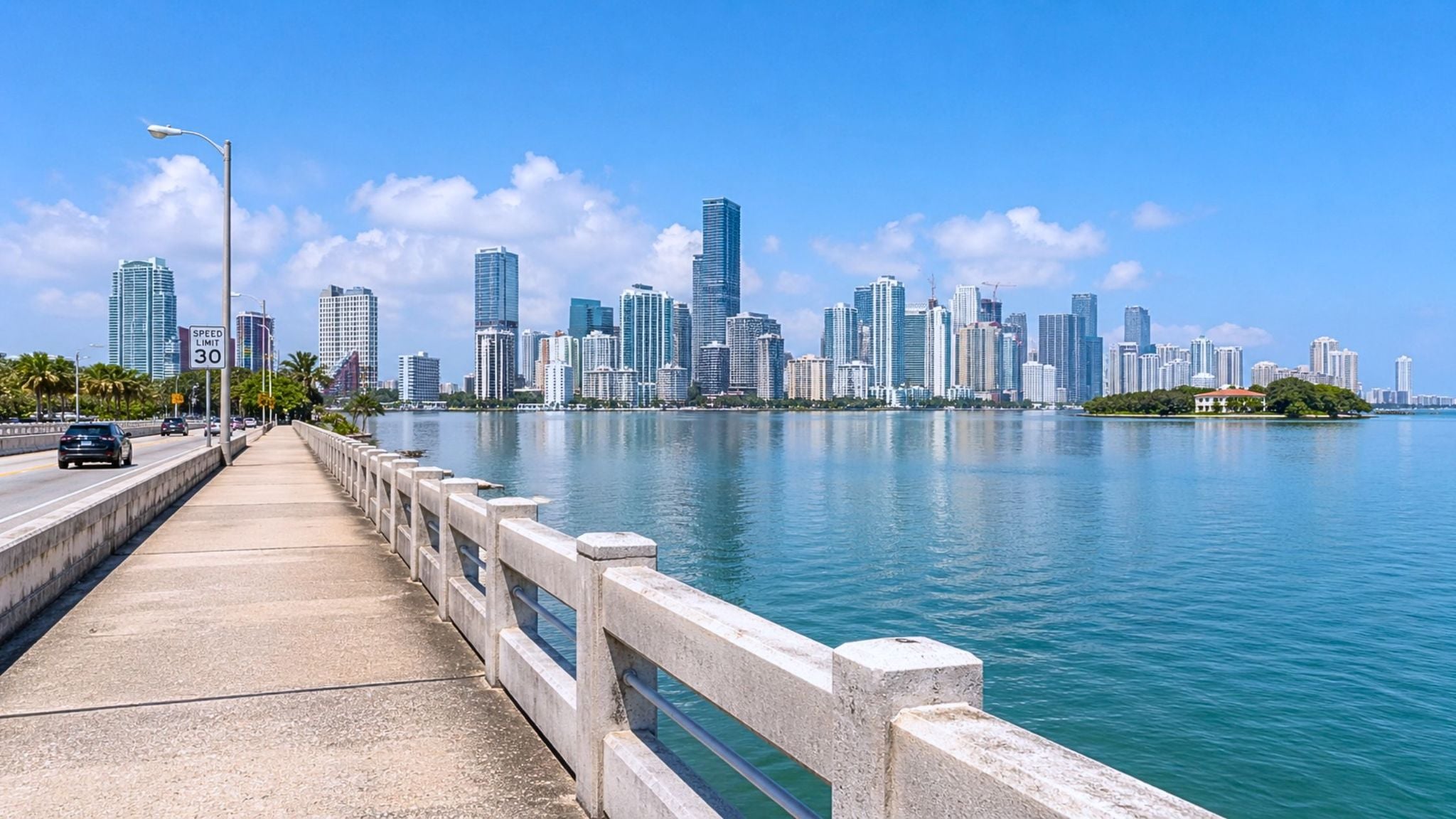
The pedestrian path runs alongside the causeway road but is set apart enough that traffic feels secondary to the scenery. Most people who make this walk regularly will tell you the same thing: do it in the morning, ideally before 9am, before the Miami heat settles in and before the weekend cyclists turn it into a competitive event.
At that hour, the bay is calm. The water shifts between deep green close to the seawall and a clearer teal farther out. Pelicans work the surface in slow, deliberate circles. The drawbridges old-style bascule bridges that actually lift for boat traffic, a rarity in South Florida's increasingly modernized infrastructure give the crossing a particular old-Florida character that slows everything down in a way that feels right.
A few things worth knowing before you go:
The walk from the Miami side entrance (near NE 15th Street and Biscayne Boulevard, in the Edgewater neighborhood) to Miami Beach runs a full one-way 2.6 miles. Allow 50 to 60 minutes at a conversational pace for one direction. The path is flat the entire way no hills, no elevation which makes it accessible to most fitness levels and genuinely enjoyable for people who are not out to set a pace record.
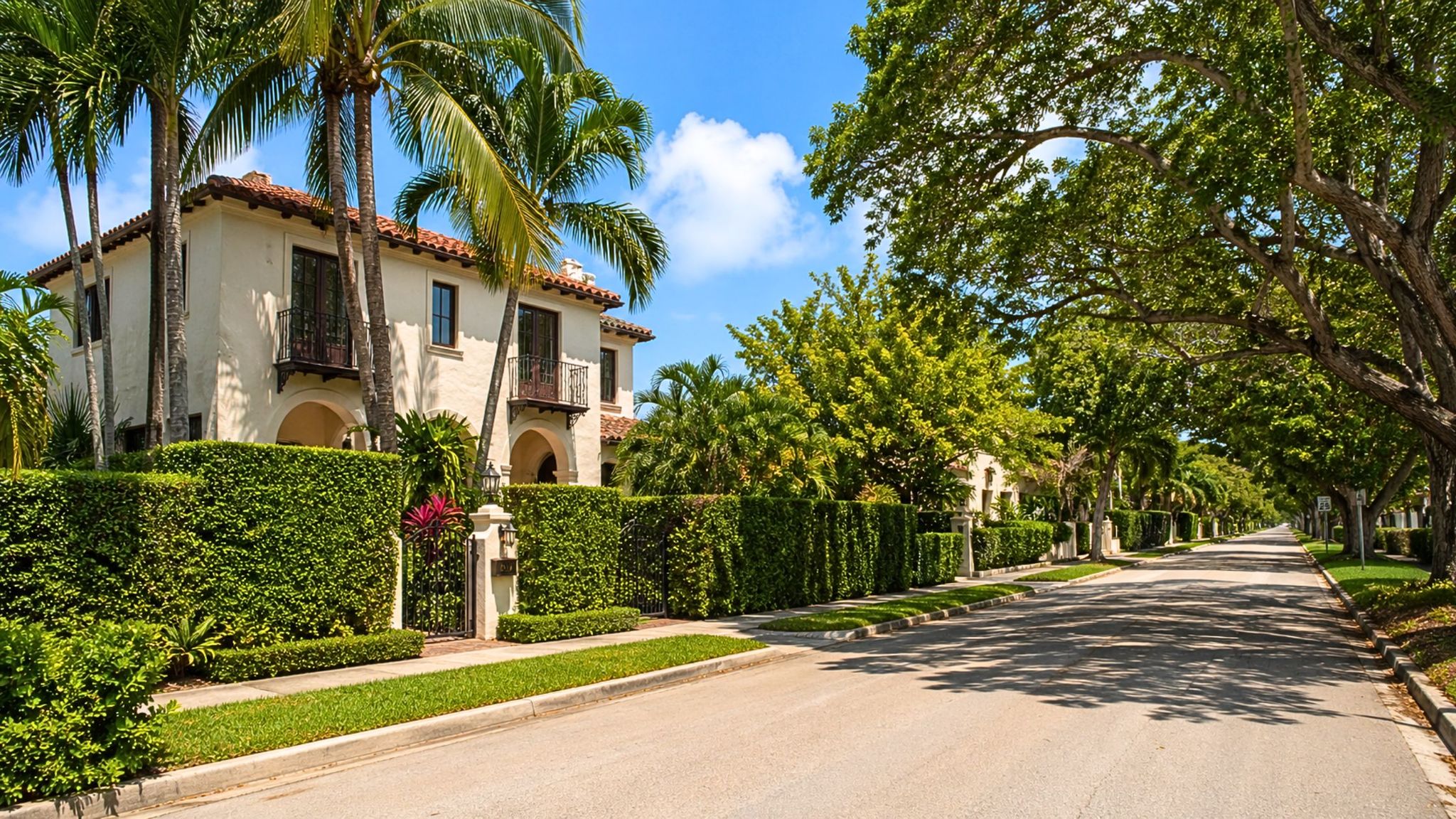
On the islands themselves, residential streets are quiet and largely car-free in feel. Sidewalks are wide. Mature trees fichus, royal palms, seagrape form a low canopy in sections that provide real shade. There are no commercial strips, no restaurants, no coffee shops on the islands. That is not an oversight. It is a deliberate residential character that residents protect fiercely.
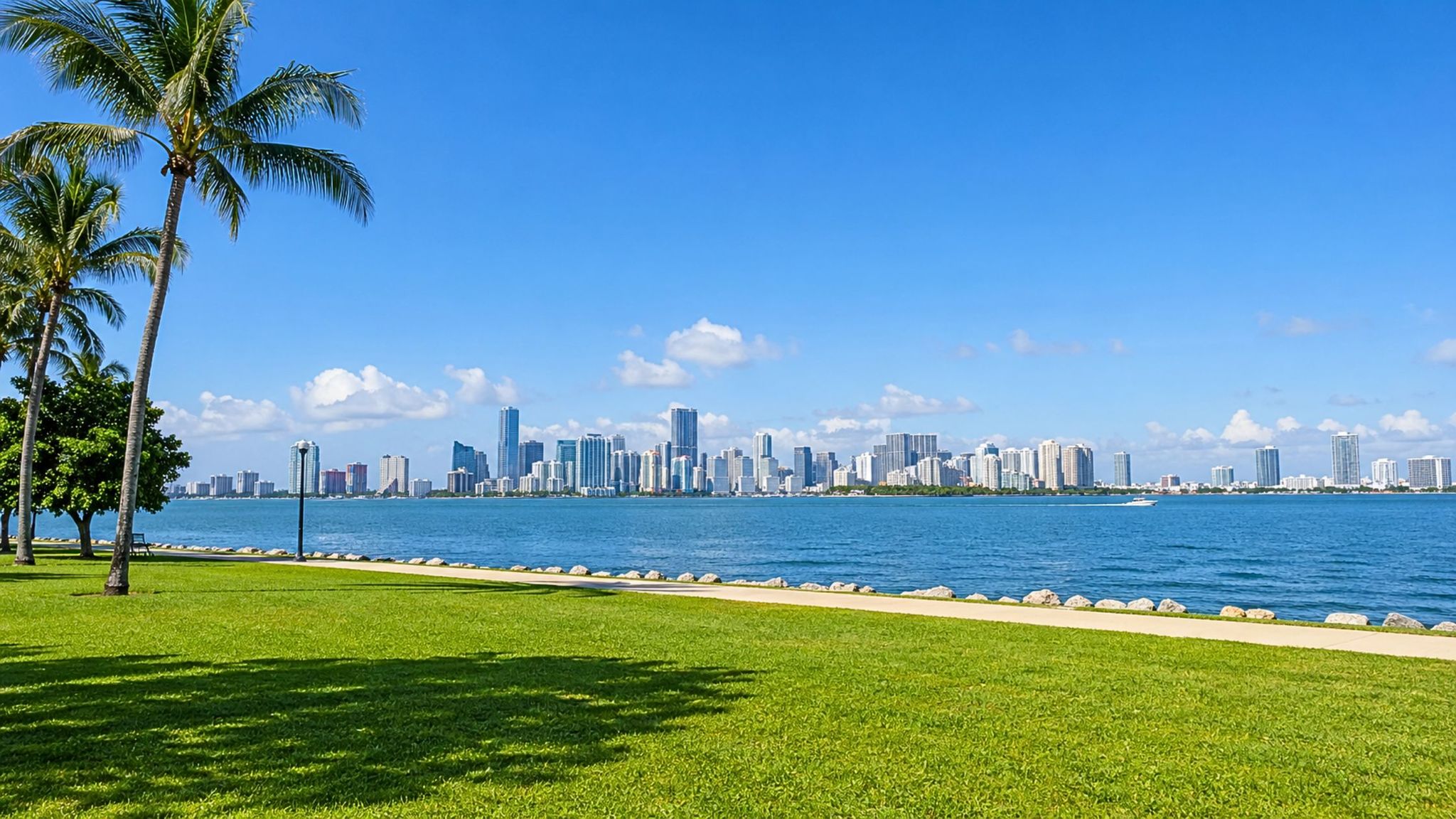
The exception is Belle Isle, the largest and most populated of the five islands. It has a dedicated waterfront park Belle Isle Park that wraps around the eastern tip of the island and sits directly on the bay. It is a genuinely lovely spot: open grass, a small sandy shore, wooden benches facing the water. On weekend mornings it draws families, couples, and dogs in roughly equal measure. The view from the eastern edge of Belle Isle, looking across to Miami Beach's mid-rise skyline, is one of the better urban vistas in Miami that most people never see.
The Distinct Character of Each Island
One thing that surprises many first-time visitors is how differently each island feels, even though they are physically connected and separated only by short bridge spans.
- Di Lido is the entry island from the Miami side and has a slightly more transitional feel as it borders Edgewater, which itself has changed considerably in recent years with significant new condo development along Biscayne Boulevard. Di Lido's homes are a mix of styles, from modest mid-century builds to more substantial renovations, and prices here tend to be more accessible than on the islands deeper into the chain.
- San Marino feels the most purely residential of the group. Lots are larger here relative to the island's footprint, homes sit back from the street behind mature landscaping, and there is a quietness to the streets that approaches suburban despite the fact that you are technically in the City of Miami Beach. This is the island where you see residents gardening on a Tuesday morning. Where the garage is actually used for a car.
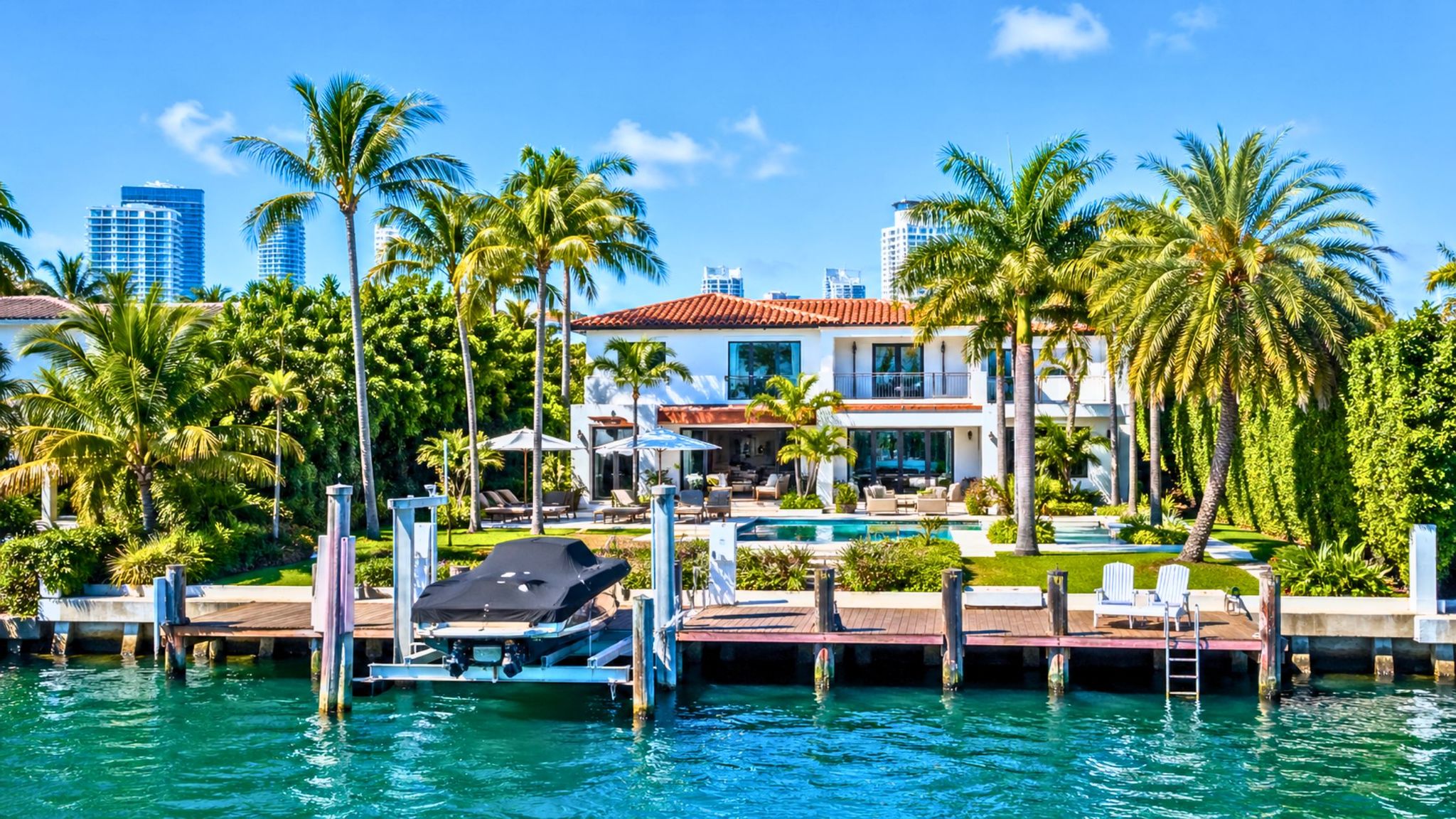
- Rivo Alto carries the most prestige of the five and is consistently where the highest prices land. The homes here tend to be the most architecturally significant, several dating back to the original 1920s Mediterranean Revival development era and many sit on waterfront lots with private docks and direct bay access. Inventory is thin and turnover is slow. When something comes up on Rivo Alto, it moves fast or it sits because the pricing is wrong.
- Belle Isle is different from the other four in one important way: it has condominiums. A collection of mid-rise and older high-rise buildings clusters along its western and southern edges, offering a more accessible price point for buyers who want the island address and the causeway lifestyle without the single-family price tag. This also means Belle Isle has the most varied demographic and the most on-street foot traffic of any of the islands.
- San Marco is the transition point into Miami Beach proper, and it has the feel of an island in the process of figuring out what it is. Homes here are a mix of original stock and newer construction, and the proximity to Miami Beach's street grid is both an advantage and a consideration, depending on what kind of buyer you are.
What the Real Estate Market Actually Looks Like Here
Let's be direct about something: the Venetian Islands are not a high-volume market. At any given time, you might see a handful of active single-family listings across all five islands combined. This is not a market you browse casually and stumble into. It is a market where knowing what is coming before it hits the MLS through an agent with genuine neighborhood relationships is the difference between seeing a property and missing it.
Single-family waterfront homes on Rivo Alto and San Marino regularly trade in the $3 million to $8 million range depending on lot size, dock access, and the extent of renovation. Non-waterfront single-family homes on Di Lido and San Marino start lower but rarely dip below $1.5 million in the current market. Belle Isle condos provide entries in the $500,000s to low seven figures for renovated units with direct water views.
What sustains those numbers is not hype. It is the combination of a fixed, finite land supply with no new islands being built in Biscayne Bay with a location that genuinely has no peer in Miami's residential geography. You are five minutes from Edgewater and the Design District. Ten minutes from South Beach. Fifteen minutes from Brickell. And yet you live on an island in the bay where the loudest sound most mornings is water against a seawall.
That arithmetic does not change regardless of what the broader Miami market is doing, which is why long-term Venetian Islands owners tend to hold their properties rather than sell into market cycles.
For current owners, checking what your home is worth can offer useful perspective on how values are shifting.
One honest note for buyers doing serious due diligence: some of the older building stock on Di Lido and Belle Isle has deferred maintenance considerations that are common across 1950s and 1960s construction in coastal Miami. A thorough inspection and a Miami-experienced inspector who understands what salt air does to a structure over decades is not optional here. It is work.
If you’d like a clearer picture of how the buying process works here, the buyer’s guide is a good place to start.”
Who Actually Lives on the Venetian Islands?
The demographic on the islands is more eclectic than the price points suggest. There are longtime Miami families who have been in San Marino for thirty years with no intention of leaving. There are buyers from New York, São Paulo, and Buenos Aires for whom a Rivo Alto estate is a primary residence or a second home that gets used more than once a year. There are young professionals in Belle Isle condos commuting to Brickell who chose the bay view over the mainland high-rise.
The one thing residents across all five islands tend to share is a specific kind of Miami sensibility: they like being in the middle of everything and having access to none of it the moment they cross their threshold. The causeway functions both as a connection and as a moat, and the people who live here understand and value both functions.
This is not the neighborhood for someone who wants to walk to a coffee shop in the morning. It is the neighborhood for someone who wants to ride a bike across a drawbridge at sunrise with Biscayne Bay on both sides and then drive to Wynwood for brunch. Those are two different people, and the Venetian Islands know which one it is built for.
What are the Venetian Islands in Miami?
The Venetian Islands are five man-made residential islands Di Lido, San Marino, Rivo Alto, Belle Isle, and San Marco located in Biscayne Bay between Miami's Edgewater neighborhood and Miami Beach. Built during Miami's 1920s land boom, they are connected by the Venetian Causeway, a 2.6-mile route with a free pedestrian and cycling path offering open bay views in both directions. The islands are primarily single-family residential, with the exception of Belle Isle, which also has condominiums. Homes on the waterfront islands regularly trade between $3 million and $8 million. Belle Isle Park, on the eastern end of Belle Isle, provides public waterfront access and bay views across to Miami Beach.
Thinking About Buying on the Venetian Islands?
The conversation about Venetian Islands real estate almost always starts the same way: someone walks the causeway, stands on that bridge at midpoint, looks both ways, and decides they need to know more. That is a good instinct.
The market is opaque by nature thin inventory, off-market transactions, and a buyer pool that does not broadcast itself. If you are seriously considering the islands, the most valuable thing you can do before calling a number on a yard sign is to spend time talking with someone who works this market consistently. There is context here that does not live on Zillow.
What the walk tells you is true: this place is different. Whether it is right for you comes down to specifics. What you need, what you are willing to trade, and what kind of relationship you want with the water. That conversation is worth having.
If you find yourself thinking about it after the walk, that’s usually the right time to reach out.
FAQ
Where are the Venetian Islands located in Miami?
The Venetian Islands are located in Biscayne Bay between Miami's Edgewater neighborhood on the mainland and Miami Beach. They are accessed via the Venetian Causeway, which runs parallel to and just north of the MacArthur Causeway. The five islands Di Lido, San Marino, Rivo Alto, Belle Isle, and San Marco sit roughly in the geographic center of the bay and are part of the City of Miami Beach municipal jurisdiction.
Is the Venetian Causeway free to walk or bike?
Yes. The Venetian Causeway pedestrian and cycling path is free for foot traffic and cyclists. Only vehicles pay the toll (currently $1.75 per crossing). The path spans the full 2.6-mile length of the causeway from NE 15th Street in Edgewater to Dade Boulevard in Miami Beach, and it remains one of the few fully accessible cross-bay routes in Miami for non-motorized transit.
What kinds of homes are on the Venetian Islands?
The majority of the Venetian Islands, particularly Di Lido, San Marino, Rivo Alto, and San Marco are single-family residential. A significant portion of the original building stock dates to the 1920s through 1950s, with notable Mediterranean Revival architecture still present, particularly on Rivo Alto. Belle Isle has the most diverse mix, including mid-rise and older high-rise condominium buildings alongside single-family homes. Many waterfront properties include private docks with direct bay access.
How much do homes on the Venetian Islands cost?
Pricing on the Venetian Islands varies significantly by island, lot type, and condition. Waterfront single-family homes on Rivo Alto and San Marino typically trade between $3 million and $8 million or more. Non-waterfront single-family homes on Di Lido and San Marino generally start in the $1.5 million to $2.5 million range. Belle Isle condominiums offer a lower entry point, with renovated units with water views trading in the mid-$500,000s to low seven figures. Inventory across all five islands is consistently limited.
Is Belle Isle Park open to the public?
Yes. Belle Isle Park is a public park located on the eastern tip of Belle Isle, operated by the City of Miami Beach. It provides open green space, waterfront bay access, a small playground area, and seating with unobstructed views across Biscayne Bay toward Miami Beach. The park is a popular spot for morning walks, picnics, and casual recreation among both residents and visitors. There is no admission fee.
Check out this article next