


Selling a home in Pinecrest 2026 is not the same conversation as selling anywhere else in Miami-Dade, and if you list an acre lot the way you would list a Kendall three-bedroom you will leave real money on the table. I live in Coral Gables, I work this southern corridor every week, and the sellers I sit down with in Pinecrest almost always start with the wrong comp set. This is the pricing playbook I actually run for Pinecrest owners heading into the strongest fall buyer window we have seen in five years.
The Pinecrest seller advantage in 2026 is that median days on market has compressed roughly 50% year over year and the $1M-plus segment countywide is up 15.5% YoY. The disadvantage is that no two acre lots in this village are truly the same, and buyers know it. Pricing a Pinecrest estate is a comp-selection problem before it is a marketing problem, and the sellers who get the first move right are the ones who close near or above ask.
Why Pinecrest pricing is harder than the rest of the county
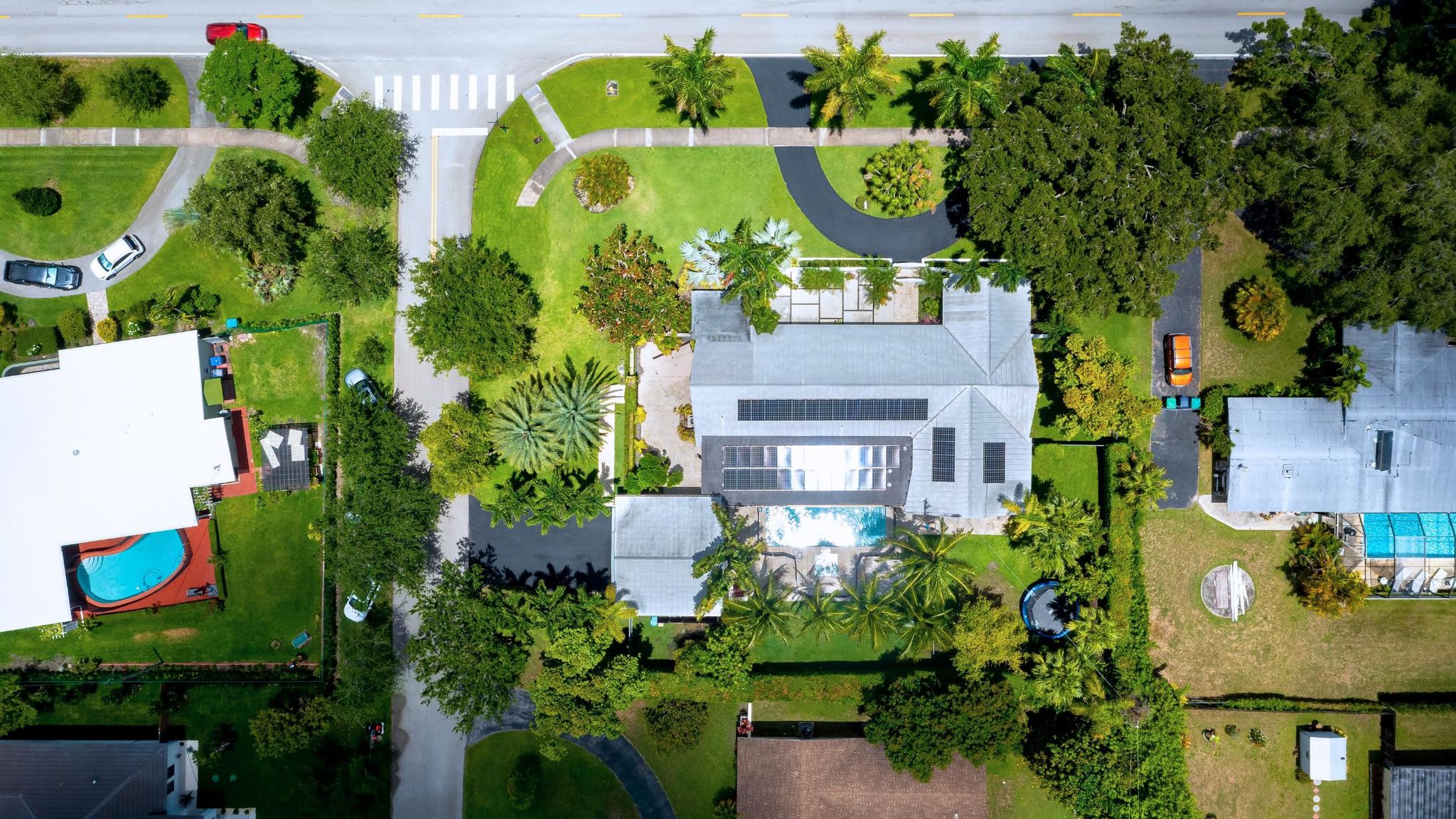
Most Miami sellers get to price against a fairly deep set of near-identical comps. Pinecrest sellers do not. The EU-1 one-acre estate zoning that has protected this village since it incorporated in March 1996 also creates a market where every lot has its own comp story. Two acres on paper can be $500,000 apart in real value once you walk the plat and factor in easements, tree canopy, the buildable footprint, and whether the block has already turned over into new construction.
The buyers in this market know it too. Pinecrest buyers are almost never first-time buyers. They are usually relocating families with a mortgage broker on speed dial (the same profile I see when I'm selling a home in Aventura), or they are step-up buyers coming out of Coral Gables or South Miami with a specific school-walk-zone requirement, or they are investor-builders scanning for tear-down candidates. All three price aggressively and all three know when a Pinecrest list price is aspirational versus supportable. If your first-week comp story is not tight, they will sit you out for 30 to 45 days and come back with a below-ask offer.
The 2026 Pinecrest market at a glance (what your comp set is really telling you)
Here is the compact read on the Pinecrest single-family market as of mid-to-late August 2026, drawn from public listing data and the countywide MIAMI REALTORS® print. Sellers should read the days-on-market and $1M-plus columns first, those are the two variables that move your list-price strategy.
Metric | 2026 figure | Source and note |
Average home value (Zillow) | $2,258,425, up 2.8% YoY | Zillow ZHVI, June 30, 2026 |
Median list price (Zillow) | $3.33M | Zillow, August 2026 |
Median asking price (active) | ~$4.7M (range $1.3M to $22.5M) | Movoto, snapshot July 21, 2026 |
Median days on market | 56 days, down about 50% YoY | Zillow, August 2026 |
Miami-Dade single-family sales YoY | +5.6% YoY in July 2026 (861 to 909) | MIAMI REALTORS July 2026 report |
Miami-Dade single-family median price | $685,000, +3.79% YoY | MIAMI REALTORS July 2026 report |
Miami-Dade $1M+ sales | +15.5% YoY in July 2026 | |
Median annual property tax | ~$12,685 | Ownwell, Miami-Dade County records |
Municipal millage (Pinecrest, FY26) | 3.9500 | Village of Pinecrest FY26 budget |
Two takeaways for sellers. First, the segment your buyer sits in ($1M-plus) is materially stronger than the countywide median suggests, which means the fall list window is real. Second, the 56-day median hides a bimodal distribution: correctly priced estate homes on rectangular acre lots are trading in under 30 days, and overpriced or awkward-lot homes are sitting past 90. Your list-price call is what decides which side of that distribution you land on.
The comp-selection framework I run for Pinecrest sellers
The comp set that actually predicts your sale price is not the neighborhood-wide MLS pull. It is the intersection of five variables I check before I quote any listing price.
Lots of geometry. A rectangular acre with buildable footprint > 60% versus a pipe-stem or T-shape with easements is a materially different asset. Two lots at identical price per square foot on paper can be half a million apart at close.
School walk zone. Miami Palmetto Senior High is A-rated and the Palmetto elementary and middle feeders are A-rated as well. Homes inside the Palmetto walk zone carry a premium that shows up in sold comps but not always in list comps. If you are inside the walk zone, your comps have to be other walk-zone sales, not the broader Pinecrest market.
Age and capital-plan status. A 1960s original build with a 1990s roof and no impact windows underwrites differently than a 2018 gut renovation with wind-mitigation credits already in place. Your buyer will price this before their inspection, and your list-price should reflect it before their offer.
Block turnover. If three adjacent lots have already teared down and rebuilt as new construction, your land value is higher and your improved-value ceiling is higher. If yours is the first modernization on a block of original builds, your comp story runs the other way.
Timing your list against the fall buyer inflow. Snowbird arrivals into Miami start showing up in offer volume around mid-October. Listing between Labor Day and October 15 gives your listing three to four full weeks of first-look exposure before the fall buyer surge, which is where the sub-30-day sales come from.

What most Pinecrest sellers get wrong in the first week
Two things trip Pinecrest sellers up almost every time. Both are fixable, and both need to be settled before you go live.
The first is anchoring on active list prices instead of closed sales. Active listings in Pinecrest are noisy right now (median $4.7M asking, with a $1.3M to $22.5M range) because the range spans entry-level estates through trophy properties. Anchoring on the active median produces list prices that overshoot on the middle-market home and undershoot on the true trophy. The comps I use are sold-in-last-90-days, in-your-walk-zone, and matched to your lot geometry.
The second is under-investing in pre-list prep on the exact three items that matter to a Pinecrest buyer: exterior curb impact from the street (mature landscape edit, driveway cleaning, gate refresh), a documented capital-plan history for roof and windows (buyers price this before offer), and a real professional photo shoot with a drone lot shot. Pinecrest buyers scroll through 40 listings on their phone before they walk one. If your listing does not stop the scroll in the first three seconds, the walk never happens.
Pricing a Pinecrest estate: three real strategies
Strategy one is the anchor-and-hold. List at your true sold-comp-supported number from day one, market aggressively for 14 days, then reassess. This is my default for owners who have flexibility on the calendar but not on the net.
Strategy two is the tight-band under. List 3 to 5% under your comp-supported number to trigger multiple offers in the first 10 days. This works best for lots that have a differentiator (walk zone, rectangular geometry, recent full renovation) that will show up on the tour but not on the listing.
Strategy three is the tear-down land play. If your improvement value is meaningfully below your land value, list on land basis with a builder audience in mind. Anchor to recent land-basis Pinecrest sales, not to home-sale-price comps, and expect a different buyer profile at the offer table. This is a similar move to the one I break down when selling a home in Bay Harbor Islands, where the walkable-family market rewards land-basis pricing on a different scale.
Before you settle on any of the three, the first move I recommend to every Pinecrest owner is a current-value benchmark so you know where you actually stand today. That number is the anchor for the whole strategy conversation.

Timing your listing: what the fall 2026 buyer window looks like
The Pinecrest buyer pool concentrates between mid-October and late April. If you list before Labor Day, you fight against summer-vacation attention. If you list after November 15, you fight against holiday-week distraction and thinning inventory attention. The sweet spot is a Labor Day through October 15 list window, with a target close in December or early January.
Owners who want a slower reveal can also use a pre-market or "coming soon" phase in September to warm the qualified buyer list without burning MLS days on market. On a Pinecrest estate that is a real advantage, because your days-on-market clock has a direct effect on final price.
When Pinecrest sellers should call me
If you are within twelve months of possibly listing in Pinecrest, three moves matter now. Get a real current-value benchmark. Pull your school walk zone and confirm your comp set. Start a capital-plan file with your roof, window, and impact documentation so a buyer's inspection cannot surprise you. When you are ready to talk pricing strategy, reach out through my contact page and we will map the full listing plan to your calendar, not the buyer's.
If you want a wider view of how Pinecrest fits into my Miami coverage, the Miami Neighborhoods hub has the current lineup, and my seller's guide download walks the full pre-list process end to end.
Ready to price your Pinecrest home?
Selling a home in Pinecrest in 2026 rewards owners who tighten their comp story before they ever set a list price, and it punishes owners who anchor to the wrong number in week one. If you are thinking about listing this fall or winter, I would love to run your numbers with you the right way. Start with a current home value benchmark or reach out and I will walk your lot before we talk about price.
Check out this article next